How rare are four-leaf clovers? The real odds and why they form.
Four-leaf clovers are rare, but less rare than the famous one-in-10,000 figure suggests. The best available count, made in Europe in 2017, found one four-leaf clover for every 5,076 ordinary three-leaf ones, or roughly 1 in 5,000. The fourth leaflet comes from a mix of genetics and growing conditions, so they cluster on certain plants instead of appearing evenly across a lawn.

How rare is a 4 leaf clover, by the numbers
The number most people know is one in 10,000. It appears in countless articles, but none of them points to an actual count. It seems to be a round figure that was repeated until it looked like a fact.
The figure with a source behind it comes from a 2017 survey run by clover enthusiasts in Europe. They counted clover leaves across several countries and found one four-leaf leaf for every 5,076 three-leaf ones. That is close to twice as common as the traditional estimate.
A second, very different count comes from herbarium sheets. Staff at the Fort Worth Botanic Garden checked 556 pressed specimens of white clover and found six four-leaf clovers, about 1 percent of sheets. That number is much higher, but it measures something else: one sheet holds many leaves, and collectors may have pressed unusual plants on purpose. It is a reminder that every estimate depends on how the counting was done.
| Estimate | Where it comes from | How much weight to give it |
|---|---|---|
| 1 in 10,000 | Popular saying, repeated online | Low: no known count behind it |
| 1 in 5,076 | 2017 count by clover enthusiasts in Europe | The best figure for leaves in ordinary lawns and fields |
| About 1 in 100 sheets | Herbarium sheets of white clover at the Fort Worth Botanic Garden | Counts sheets, not leaves; collectors may favour odd plants |
How rare is it to find a four leaf clover in a real lawn?
An average of 1 in 5,000 does not mean you will find one after looking at 5,000 leaves. Four-leaf clovers are not scattered at random. Because the trait is partly inherited, a plant that makes one four-leaf leaf often makes others, and its creeping stems can carry the same trait across a patch. Meanwhile, other patches can have none at all.
This is why some people find dozens in a summer while others never find one. Experienced searchers scan large areas quickly, then slow down and search the same patch closely once they find a single four-leaf clover. Looking at a lawn's overall pattern works better than inspecting leaves one by one, because a leaf with four leaflets breaks the repeated three-part shape your eye gets used to.
Other leaf counts turn up too. Five-leaf and six-leaf clovers are rarer still, and plants with a strong tendency to produce extra leaflets can occasionally make many more. Guinness World Records lists a clover with 63 leaflets found in Japan in 2023.
Why four-leaf clovers form
An ordinary clover leaf is compound: one leaf divided into three leaflets. A four-leaf clover is the same leaf with an extra leaflet. Botanists point to two kinds of cause, and both seem to play a part.
- Genetics: In 2010, a team led by plant breeder Wayne Parrott at the University of Georgia reported in the journal Crop Science that it had located the genetic region linked to the four-leaf trait in white clover, near genes for red leaf markings. White clover carries four copies of each gene, which helps explain why the trait is inherited in complicated ways.
- Environment: The same researchers stressed that plants with the genes do not always show the trait. Parrott said that if daylight or temperatures are not right, you will not see it. Other possible influences, such as damage to the growing point, are suggested in some sources but are less well studied.
The practical result is that a four-leaf clover marks a plant that is worth watching. If the conditions that produced one continue, the same plant may produce more.
Which plants grow four-leaf clovers
Any species of true clover (Trifolium) can occasionally produce four leaflets, but most finds are white clover, Trifolium repens. It is the clover of lawns, parks and roadsides, so it is the one people see most often. White clover has small white or pinkish ball-shaped flower heads and leaflets that often carry a pale V-shaped band.
Several plants that look similar never count as four-leaf clovers:
- Oxalis tetraphylla: sold as Iron Cross or lucky clover. It is a wood sorrel whose normal leaf has four heart-shaped leaflets with a dark purple centre, so every leaf has four.
- Creeping woodsorrel (Oxalis corniculata): a common weed with three heart-shaped leaflets and small yellow flowers. It is often mistaken for clover in lawns.
- Black medic and other trefoils: three small leaflets and yellow flowers. They grow alongside clover but belong to other genera.
For the main features that separate clover species, including leaf marks and flower colour, see the clover identification guide.
What are the chances of finding a four leaf clover yourself?
Your chances depend mostly on where and how you look. These habits help:
- Look where white clover is dense. Unmown lawn edges, parks and sunny verges with plenty of white clover give you more leaves to scan per minute.
- Scan for a broken pattern. Stand or kneel and let your eyes move over the patch. A four-part leaf stands out as an odd shape among many three-part leaves.
- Search the same plant again. When you find one, follow its creeping stems. Neighbouring leaves from the same plant are more likely to have extra leaflets.
- Check that it is a true clover. Look for rounded or oval leaflets, often with a pale band, and ball-shaped flower heads. Heart-shaped leaflets point to Oxalis.
- Count the leaflets, not the leaves. Two overlapping leaves can look like one leaf with four parts. Follow the leaflets back to a single stalk.
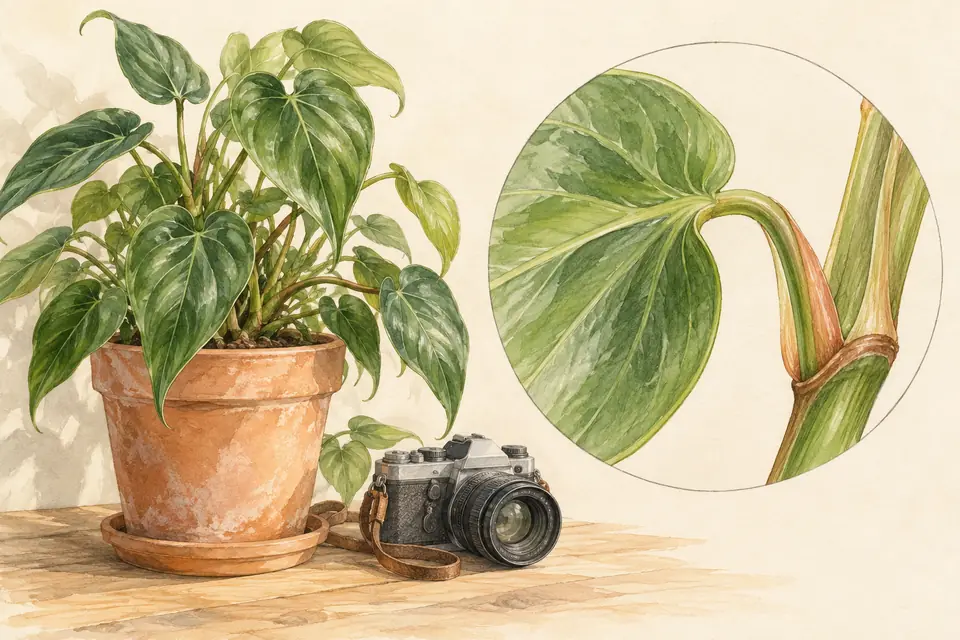
If you want to compare a find with reference photos, take one picture from above and one close-up of the leaf stalk. The plant photo guide explains how to frame leaves so the details are clear.
How to keep a four-leaf clover
Pressing is the simplest way to keep one. Lay the leaf flat between two sheets of absorbent paper, place it inside a heavy book, and leave it for one to two weeks. Once dry and flat, it can go into a frame, a clear phone case or laminated card. Keep pressed leaves away from direct sun if you want the green colour to last longer.
If you would like more four-leaf clovers, mark the plant you found it on and check it again during the season. Because the trait is partly inherited, gardeners sometimes dig up a section of such a plant and grow it in a pot, then watch whether it keeps producing extra leaflets in their own conditions.
Symbols and the meaning of each leaf
Clovers have carried meaning in European folklore for centuries. A common tradition gives each leaflet of a four-leaf clover a name: faith, hope, love and luck. The fourth leaflet, being the rare one, is the one linked to luck.
A four-leaf clover is also different from a shamrock. The shamrock associated with Ireland and Saint Patrick is a three-leaf plant, and most botanists consider it to be lesser clover (Trifolium dubium) or white clover. The four-leaf clover is a symbol of luck rather than of Ireland.
Frequently Asked Questions
Answers to common questions about plant care and this tool.
Related plant guides and tools
View all guides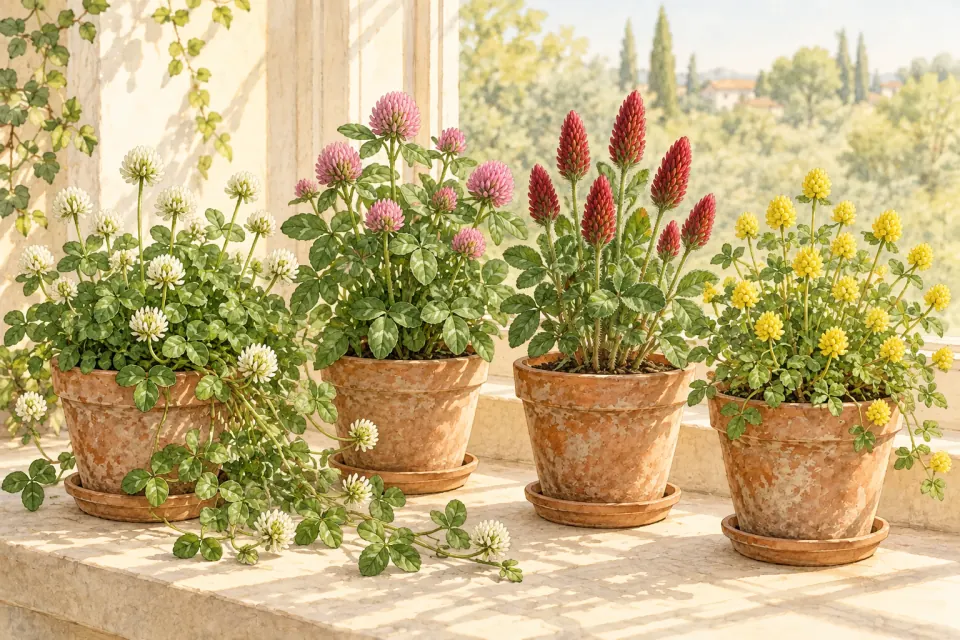

Further reading and references
- Four-leaf clover — Wikipedia Summarises the 2017 count of one four-leaf clover per 5,076, look-alike plants, and the Guinness record. A community-edited reference; check the cited sources. [Source ]
- Will the real four leaf clover please stand up — Fort Worth Botanic Garden Herbarium check of 556 white clover sheets, with notes on Oxalis look-alikes. [Source ]
- A lucky finding — University of Georgia Report on Wayne Parrott’s Crop Science research into the genetics of the four-leaf trait and the role of growing conditions. [Source ]