Propagate houseplants with the right method for the plant.
A cutting, division, or layered stem can become a new plant, but the useful method depends on the species and the part you have. Start with a healthy parent plant, identify its growth points, and expect rooting to take weeks or sometimes months. This guide explains what to look for without promising that every cutting will root.
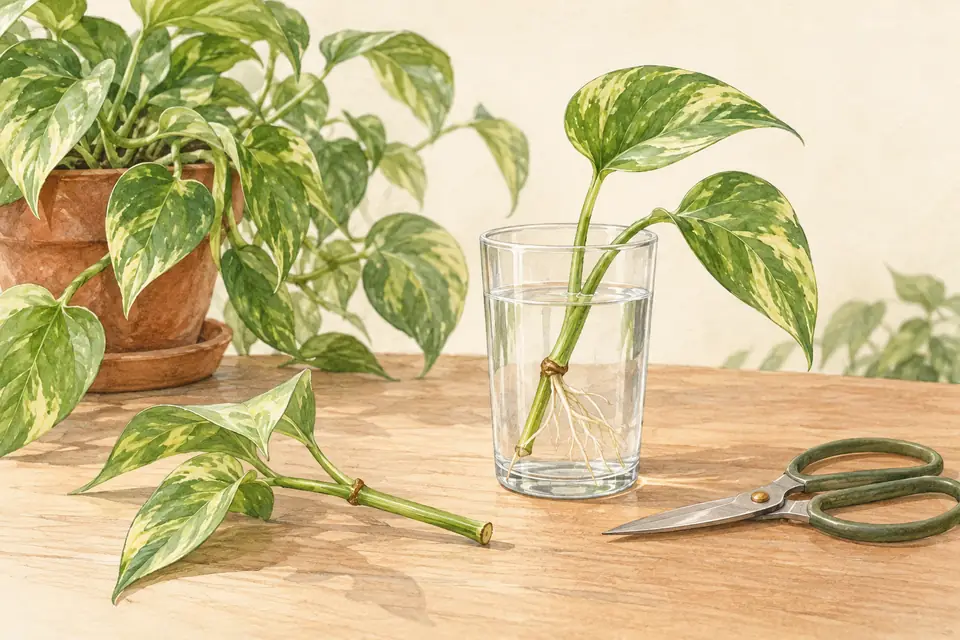
Choose a method before cutting
Vegetative propagation uses part of an existing plant. A new plant usually retains the parent's genetic traits, although its appearance may change with growing conditions and some variegated plants do not reproduce their pattern reliably from every method. Check a species-specific guide before removing valuable growth.
Stem cutting
A healthy stem with a node, as on pothos or Monstera.
Keep at least one suitable node on the cutting; remove leaves that would sit below the water or medium.
Leaf cutting
Species known to grow from a leaf, such as African violet or some begonias.
A leaf alone is not enough for every species. A Monstera leaf without a stem node will not make a new vine.
Division
A mature plant that forms separate clumps or offsets.
Each division needs healthy roots and a growing point; avoid pulling apart a single crown.
Air layering
A suitable woody or climbing stem, including some Ficus and Philodendron.
Roots form while the stem remains attached. Wait for an established root system before separating it.
Match the method to common houseplants
| Plant | Usual method | What to know |
|---|---|---|
| Pothos (Epipremnum aureum) | Stem cuttings in water or potting mix | Each cutting needs at least one node. It is one of the easiest houseplants to root. |
| Monstera (Monstera deliciosa) | Stem cuttings with a node | A leaf without a node will not grow a new stem. |
| Snake plant (Dracaena trifasciata) | Division or leaf sections | Leaf sections of yellow-edged forms usually grow into plain green plants. Division keeps the yellow edge. |
| Spider plant (Chlorophytum comosum) | Plantlets | Pin a plantlet onto moist potting mix while it is still attached. Cut the runner once it has rooted. |
| African violet (Saintpaulia) | Leaf cuttings with the leaf stalk | Insert the stalk into moist potting mix. Small plants form at its base. |
| ZZ plant (Zamioculcas zamiifolia) | Division or leaf cuttings | Leaf cuttings are slow. They can take several months to form a tuber and a new shoot. |
| Peace lily (Spathiphyllum) | Division | Each piece needs its own roots and at least one growing point. |
| Rubber plant (Ficus elastica) | Air layering or stem cuttings | The milky sap can irritate skin. Wear gloves when you cut it. |
| Chinese money plant (Pilea peperomioides) | Offsets | Cut away offsets that already have their own roots. |
Find the node on a stem cutting
A node is the place where a leaf or bud joins the stem. The stretch between nodes is an internode. For plants such as Monstera, include a node with a viable bud on a stem cutting: a detached leaf and petiole may stay green or grow roots but cannot grow a new stem without that growing point. Other plants, including African violets and some begonias, can produce new plants from leaves, so the rule is species-specific.
Take and care for a stem cutting
- Choose healthy growth: Select a stem without visible rot or heavy pest damage. Check that the parent plant is suitable for stem cuttings.
- Use a clean tool: Make a clean cut below a suitable node. Keep a bud or growing tip on the piece you want to root.
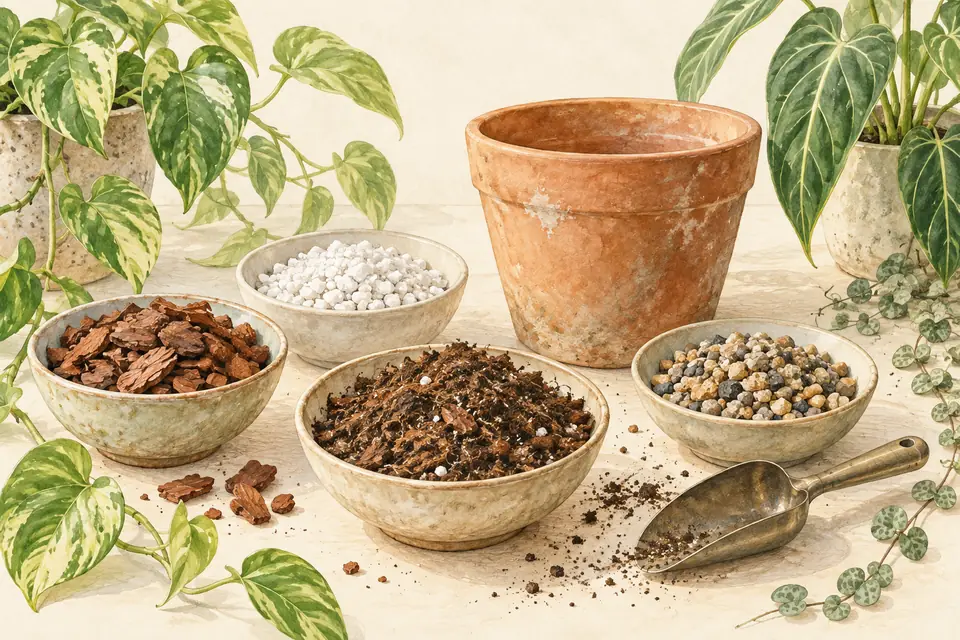
- Choose a medium: For species that root in water, place the node below the surface and keep leaves above it. Alternatively, insert the node into a moist, well-draining propagation or potting mix. A clear container helps you see roots in water, but the medium should fit the species.
- Give gentle conditions: Provide bright light appropriate for the species, avoiding hot direct sun on an unrooted cutting. Keep the medium moist enough to prevent drying but not waterlogged. Change cloudy water and inspect for rotting stems.
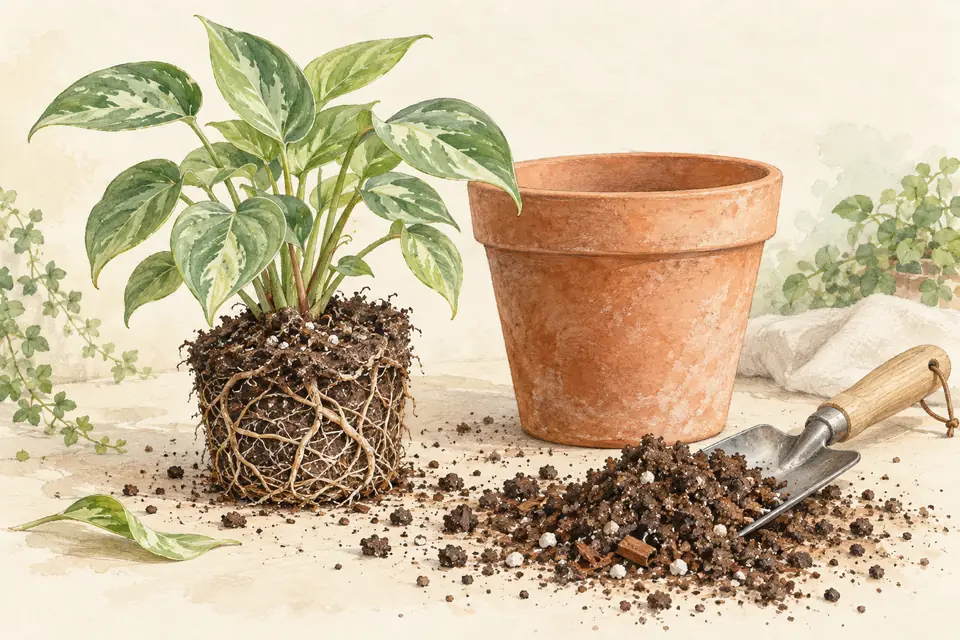
- Pot on carefully: Once a useful root system has formed, move the cutting into a suitable pot and mix. Water it in, then adjust watering as the plant establishes. A few roots or a fixed number of days do not guarantee readiness.
Rooting hormone is optional for many easy-rooting houseplants. Product labels and species guidance matter more than a universal dose. If a cutting wilts or rots, check its light, moisture, temperature, and whether the chosen method suits that plant before trying again.
Water, mix, and other rooting media
Water makes root growth easy to see and works for some houseplants, including Monstera. A light, moist potting medium supports roots while reducing the need for a later water-to-mix move. Perlite and expanded clay can also be used with suitable watering methods. None of these media guarantees success, and roots grown in water may be more fragile than roots formed in a solid medium.
Choose a clean container with suitable drainage for solid media. Avoid stale water or a saturated mix. When moving a water-rooted cutting to potting mix, handle the roots gently and watch the plant while it adjusts. Media comparisons cannot promise a success rate or predict transplant shock for your cutting.
Air layer a suitable large stem
Air layering encourages roots on a stem that remains attached to the parent plant. It can be useful for some Ficus, Philodendron, and other suitable plants. The stem still needs moisture and care, and rooting may take months rather than a fixed four-to-eight-week schedule.
- Choose the stem: Pick a healthy, mature stem and check a species-specific method before wounding it.
- Prepare the layer: Make the recommended wound, then surround it with damp, sustainably sourced sphagnum or another appropriate material. Wrap it to retain moisture without crushing the stem.
- Watch for roots: Check the layer periodically and keep the material damp. If it dries out or rots, address the conditions rather than cutting the stem immediately.
- Separate only after rooting: When strong roots have developed, cut below the rooted section and pot it in a suitable mix. Keep the new plant sheltered while it establishes.
A worked example: rooting a pothos cutting
- Choose a healthy vine and cut a piece with three or four nodes. Cut just below a node with clean scissors.
- Remove the leaf at the lowest node, so no leaf sits in the water.
- Put the cutting in a jar of room-temperature water. Keep the bare node under the surface.
- Place the jar in bright light, out of direct sun.
- Replace the water every week, or sooner if it turns cloudy.
- Pot the cutting when it has several firm roots. Many growers wait until the roots are about 5 cm long.
- Use a small pot, about 8 to 10 cm wide, with moist potting mix.
- Keep the potting mix evenly moist for the first few weeks. Then water as you would an established pothos.
In a warm, bright room, the first roots often appear within a few weeks. In a cool room in winter, the same cutting can take much longer.
Pick the right time of year
Most houseplant cuttings root best in spring and early summer. The parent plant grows actively then, and days are long.
In a Mediterranean climate such as Lebanon’s, midsummer heat can dry a cutting before it roots. Keep cuttings in bright shade, away from hot windows. Water in a glass jar warms quickly on a sunny sill. Check the water level and the potting mix more often.
In winter, shorter days and cooler rooms slow rooting. A cutting can sit for weeks without visible roots. Keep it in your brightest spot, away from cold glass, and wait before you decide it has failed.
Common mistakes, and why they happen
| Mistake | Why it happens | What to do instead |
|---|---|---|
| Cutting between nodes | A long bare stem looks like enough material. | Make sure each piece has at least one node. |
| Leaving leaves under water | It saves trimming. | Remove them. Leaves rot under water and foul it. |
| Keeping too many leaves | A full cutting looks healthier. | Keep two or three leaves. Each leaf loses water that the cutting cannot yet replace. |
| Placing cuttings in direct sun | More light seems better. | Use bright light without direct sun until roots form. |
| Pulling a cutting to check for roots | Waiting is hard. | Watch through a clear container, or wait for new leaves. Pulling tears young roots. |
| Potting a new cutting in a large pot | It seems to save a later repot. | Use a small pot. A large volume of potting mix stays wet around a few roots. |
Keep cuttings away from pets
The ASPCA lists pothos and Monstera as toxic to dogs and cats. Their leaves contain insoluble calcium oxalate crystals, which irritate the mouth. Jars of cuttings on low shelves are easy for pets to reach. Keep them on a high shelf or in a room pets cannot enter.
If a pet chews a plant, contact your veterinarian or an animal poison control service.
When a cutting does not root
Some cuttings fail even when prepared carefully. A missing node on a species that needs one, an unhealthy parent, poor light, prolonged dryness, or excessive moisture are common points to investigate. Clean tools and containers reduce contamination; there is no need for flame sterilization or a rigid laboratory routine at home. Species differ in whether a cut surface should dry before planting, so do not apply one callusing rule to every fleshy stem.
Compare the plant with a species-specific extension guide, change one condition at a time, and be patient. Penn State Extension notes that some houseplants form roots quickly while others take months.
Frequently Asked Questions
Answers to common questions about plant care and this tool.
Related plant guides and tools
View all guides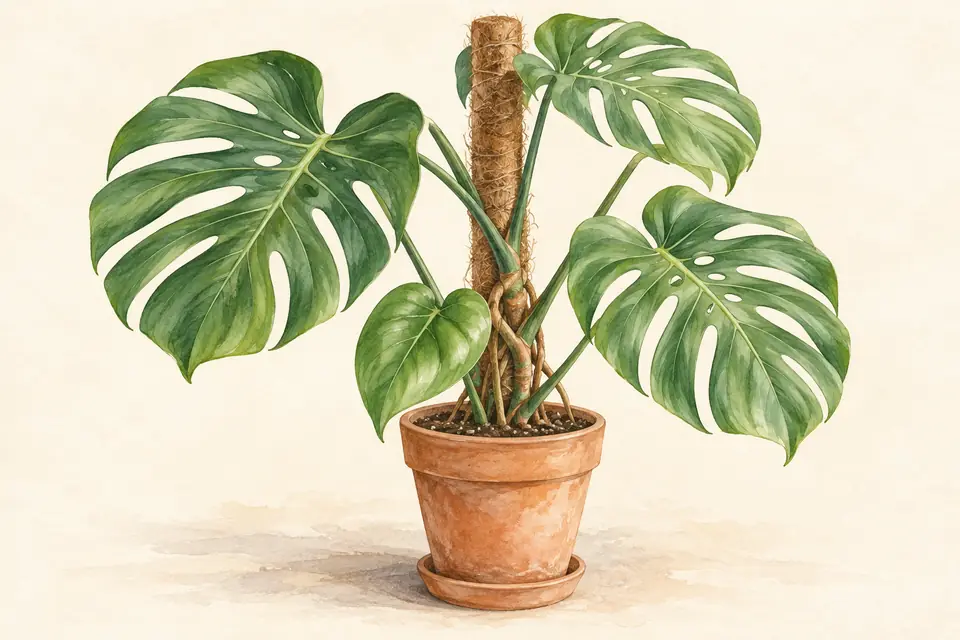
Further reading and references
- Propagating Monstera deliciosa — University of Minnesota Extension Species-specific stem-node requirements and comparison of water, potting mix, and expanded clay. [Source ]
- Propagating Houseplants — Penn State Extension Methods for leaf and stem cuttings, division, and layering, with variable rooting times. [Source ]
- Air layering of plants — Royal Horticultural Society Step-by-step layering guidance and examples of suitable plants. [Source ]
- Propagation (Extension Gardener Handbook, chapter 13) — NC State Extension Stem, leaf, and leaf-bud cuttings, division, layering, and the conditions that help cuttings root. [Source ]
- Golden Pothos — ASPCA Animal Poison Control Listed as toxic to dogs and cats. [Source ]
- Cutleaf Philodendron (Monstera deliciosa) — ASPCA Animal Poison Control Listed as toxic to dogs and cats because of insoluble calcium oxalates. [Source ]