Types of daisies, and the look-alike flowers often mistaken for them.
A daisy is not one plant. The word covers dozens of species in the Asteraceae, the daisy or sunflower family, which has more than 32,000 species. What they share is the flower head: what looks like one flower is really a tight cluster of many tiny flowers, with a ring of petal-like ray florets around a centre of small disc florets. That structure is the quickest way to tell a true daisy from the many flowers that only look like one. This guide covers the common types of daisies you are likely to see in lawns, gardens, and florists, then the look-alikes that belong to other families.
What makes a daisy a daisy
Botanists call the daisy flower head a capitulum. It is a pseudanthium, a false flower built from many true flowers. Each white or coloured "petal" around the edge is a complete ray floret with one long, strap-shaped petal. The yellow or dark centre is packed with disc florets, each a tiny tube with five small lobes. Below the head sits a ring of green bracts that looks like a calyx but protects the whole cluster.
If you pull a single "petal" from a daisy and look closely, you can often see that it has its own tiny base, and sometimes its own style. A true single flower, such as a buttercup or an anemone, has separate petals attached around one central set of stamens and carpels, with no packed centre of tiny tubes.
Common types of daisies
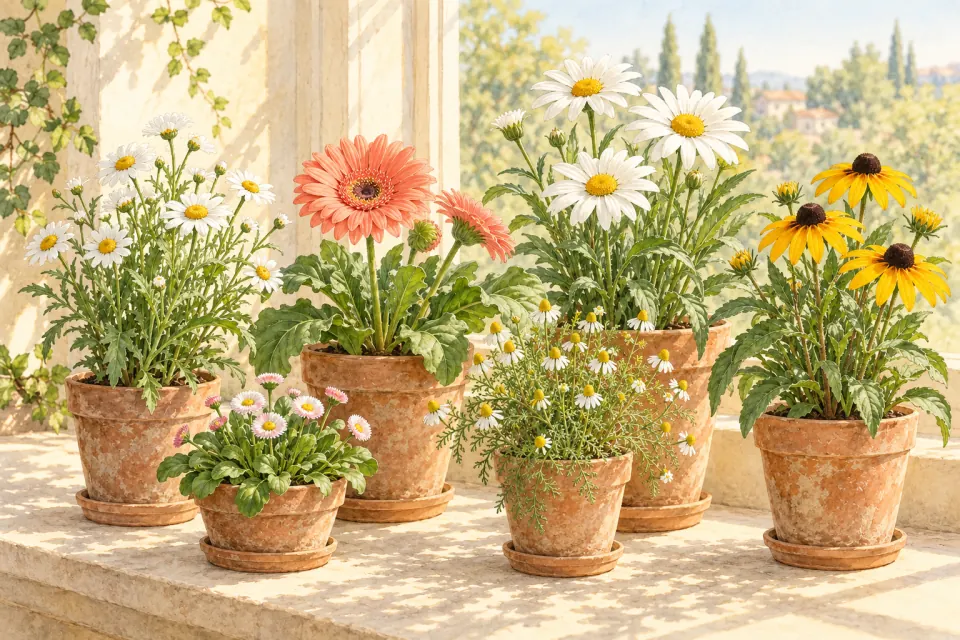
- Common daisy (Bellis perennis): the small lawn or English daisy, native to Europe. It grows from a flat rosette of spoon-shaped leaves, rarely taller than 20 centimetres, with heads 2 to 3 centimetres across. The name "daisy" comes from "day's eye", because the head closes at night and opens in the morning.
- Oxeye daisy (Leucanthemum vulgare): a taller meadow daisy, native to Europe and temperate Asia, with white rays and a yellow centre on stems up to about knee height. It has been introduced to North America, Australia, and New Zealand, where it spreads in pastures and roadsides.
- Shasta daisy (Leucanthemum × superbum): a garden hybrid with the classic white-and-yellow look of the oxeye daisy but larger heads. It is one of the most widely grown border perennials, with single, double, and frilled forms.
- Marguerite daisy (Argyranthemum frutescens): a bushy, woody-based daisy from the Canary Islands, sold for pots and patios in white, pink, and pale yellow.
- Gerbera daisy (Gerbera jamesonii and hybrids): the large, bright florist daisy, from South Africa, also called the Transvaal or Barberton daisy. Heads come in red, orange, pink, yellow, and white on long, leafless stems.
- African daisies (Osteospermum): also called Cape daisies, often with blue or purple centres and rays in white, purple, pink, or yellow. Many close their heads in dull weather. The name "African daisy" is also used for gerbera, so check the Latin name on the label.
- Coneflowers and black-eyed Susans (Echinacea and Rudbeckia): North American daisies with raised, cone-shaped centres. Echinacea is usually purple-pink with a spiky orange-brown cone; Rudbeckia is usually golden yellow with a dark brown centre.
Other familiar plants with daisy-type heads include chamomile, fleabanes (Erigeron), blanket flowers (Gaillardia), asters, and chrysanthemums. Even sunflowers and dandelions are in the same family; a dandelion simply has ray florets all the way to the centre and no disc florets.
Daisy varieties at a glance
| Daisy | Centre | Where you see it |
|---|---|---|
| Common daisy | Small, flat, yellow | Lawns and short grass |
| Oxeye daisy | Yellow, slightly domed | Meadows and roadsides |
| Shasta daisy | Yellow, large heads | Garden borders |
| Gerbera | Green, yellow, or dark | Florists and pots |
| African daisy | Often blue or purple | Patio pots and dry beds |
| Coneflower | Raised, spiky cone | Prairie and pollinator gardens |
Most garden daisies want the same basics: full sun, soil that drains well, and deadheading to keep new heads coming. Gerberas and African daisies dislike cold, wet roots, while Shasta daisies and coneflowers are hardy perennials that can be divided every few years in spring.
Flowers that look like daisies but aren't
Many flowers have a ring of petals around a bright centre, so they pass for daisies at a glance. The test is the centre: in a true daisy it is a packed cushion of tiny tubular florets, while in a look-alike it is a single flower's stamens or a seed-making structure.
- Ice plants (Delosperma): low succulents in the Aizoaceae, with about 170 species from southern and eastern Africa. Their shiny, many-petalled flowers in pink, purple, orange, or yellow look like daisies, but each is a single flower with a centre of stamens, and the leaves are thick and fleshy.
- Japanese anemones (Anemone hupehensis and hybrids): late-summer flowers in the buttercup family, with five or six pink or white petal-like sepals around a ring of yellow stamens and a green central knob.
- Bloodroot (Sanguinaria canadensis): a spring woodland flower in the poppy family, with white petals and a yellow stamen centre. It has one lobed leaf wrapped around the stem and orange-red sap.
- Strawberry and bramble flowers: members of the rose family with five round white petals and a yellow centre. Count the petals: five, all the same size, attached around one flower, means it is not a daisy.
How to identify a daisy in four checks
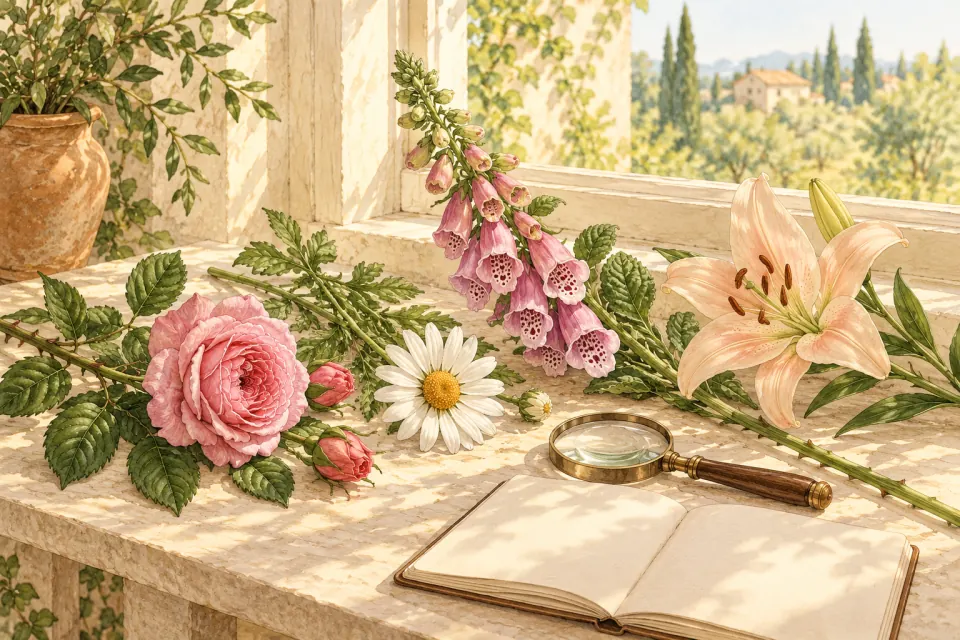
- Look at the centre with a lens. Tiny tubes packed together mean disc florets, which means a daisy-family head.
- Turn the head over. A daisy has one or more rows of green bracts under the head, not five separate sepals.
- Count the petals. Daisies usually have many rays, often more than a dozen. Exactly four, five, or six equal petals usually point to a single flower.
- Check the leaves. Thick, fleshy leaves suggest an ice plant. Lobed or toothed leaves on a soft stem fit many daisies.
Are daisies safe for pets?
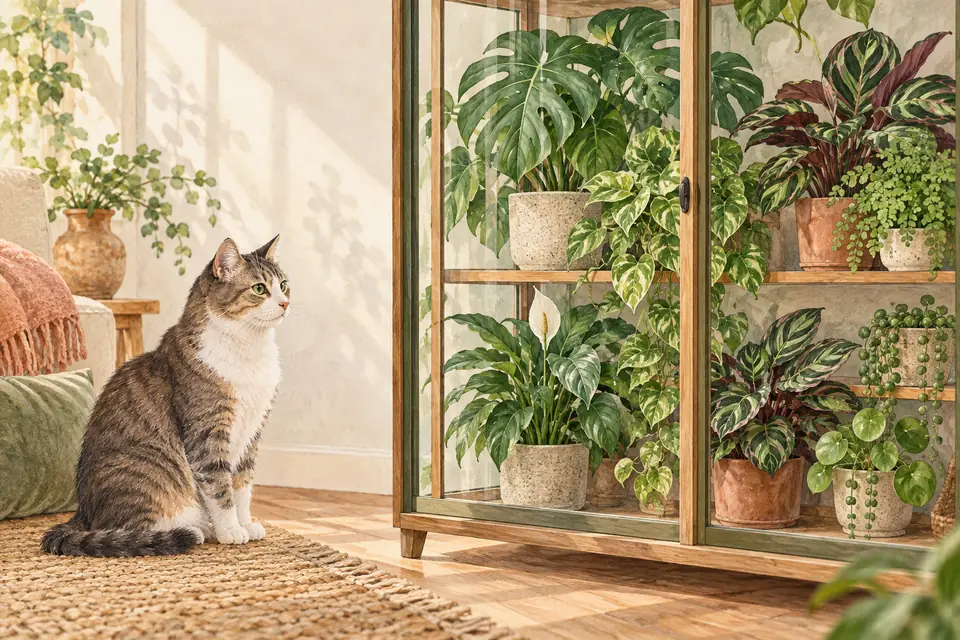
Not all of them. The ASPCA lists the florist's daisy, a chrysanthemum, as toxic to dogs, cats, and horses because of sesquiterpene lactones and pyrethrins. Signs include vomiting, diarrhoea, drooling, and skin irritation. Many daisy-family plants can also cause skin reactions in people who are sensitive to them. If a pet chews a plant you cannot name, keep a sample and call your veterinarian.
Frequently Asked Questions
Answers to common questions about plant care and this tool.
Related plant guides and tools
View all guides
Further reading and references
- Asteraceae — Wikipedia Size of the daisy family and the structure of its flower heads. Community-edited; cross-check key facts. [Source ]
- Pseudanthium — Wikipedia How a flower head made of many florets imitates a single flower. [Source ]
- Bellis perennis — Wikipedia The common daisy: size, habitat, and the origin of the name. [Source ]
- Leucanthemum vulgare — Wikipedia The oxeye daisy and where it has been introduced. [Source ]
- Delosperma — Wikipedia Ice plants, a daisy look-alike in the Aizoaceae. [Source ]
- Daisy — ASPCA Animal Poison Control Toxicity of the florist's daisy to dogs, cats, and horses. [Source ]