Vine with oval leaves: how to identify the vine in your garden.
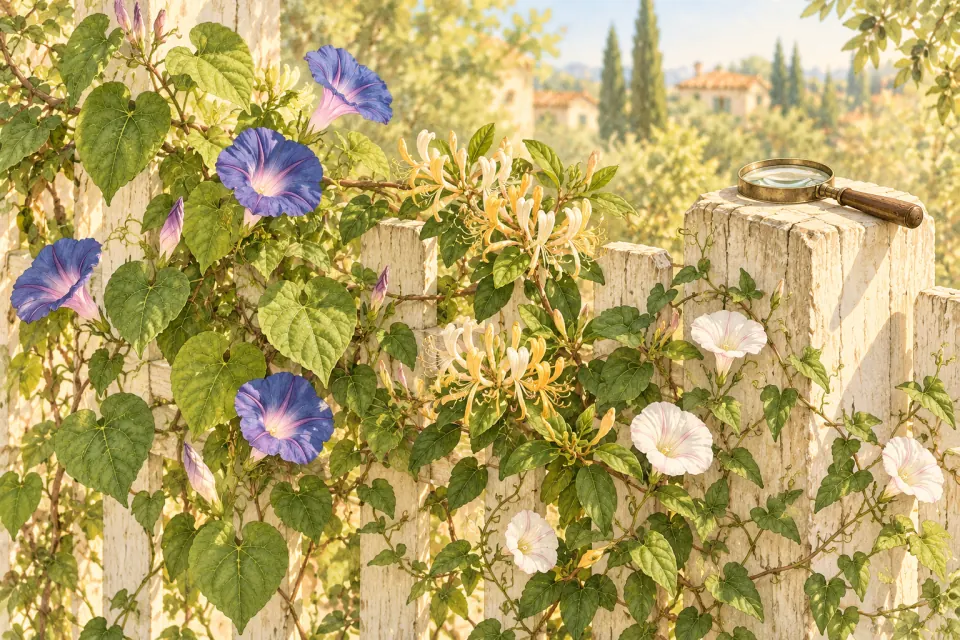
Many common garden vines have oval leaves, so leaf shape alone rarely tells you which one you have. Three quick checks do most of the work: whether the leaves grow in opposite pairs or one at a time, how the stem climbs, and what the flowers or fruit look like. Paired leaves on a twining stem often mean honeysuckle, while round, toothed leaves set singly along a twining stem suggest Oriental bittersweet.
Start with safety: rule out poison ivy
Before handling an unknown vine, check that it is not poison ivy. Poison ivy leaves are compound: each leaf is made of three leaflets, and the middle leaflet is longer than the two side ones. The leaflets are often oval with smooth, toothed or slightly lobed edges, which is why poison ivy can pass for an oval-leaved vine at first glance. Older stems climbing trees are covered in hairy-looking aerial roots. Its oil can cause an itchy rash, so wear gloves until you are sure.
Virginia creeper, a harmless native vine often confused with poison ivy, has five leaflets per leaf instead of three. The guide to Virginia creeper explains how to tell the two apart.
Vine identification by leaf shape and arrangement
Leaf shape narrows the list, but arrangement separates it. Look at where leaves join the stem:
- Opposite: two leaves leave the stem at the same point, facing each other. Honeysuckle, wintercreeper, climbing hydrangea, star jasmine and Carolina jessamine are opposite.
- Alternate: one leaf at each point, alternating along the stem. Oriental bittersweet, kiwi vines, morning glories and bindweeds are alternate.
Then look at the leaf itself. Note whether the edge is smooth or toothed, whether the surface is glossy or dull, and whether the tip is rounded or pointed. A leaf described as oval in one guide may be called elliptic, ovate or round in another, so use these terms loosely and rely on several features together.
How the vine climbs
Vines climb in a few distinct ways, and each plant uses one main method:
- Twining stems: the whole stem spirals around a support. Honeysuckle, bittersweet, star jasmine, morning glory and kiwi climb this way.
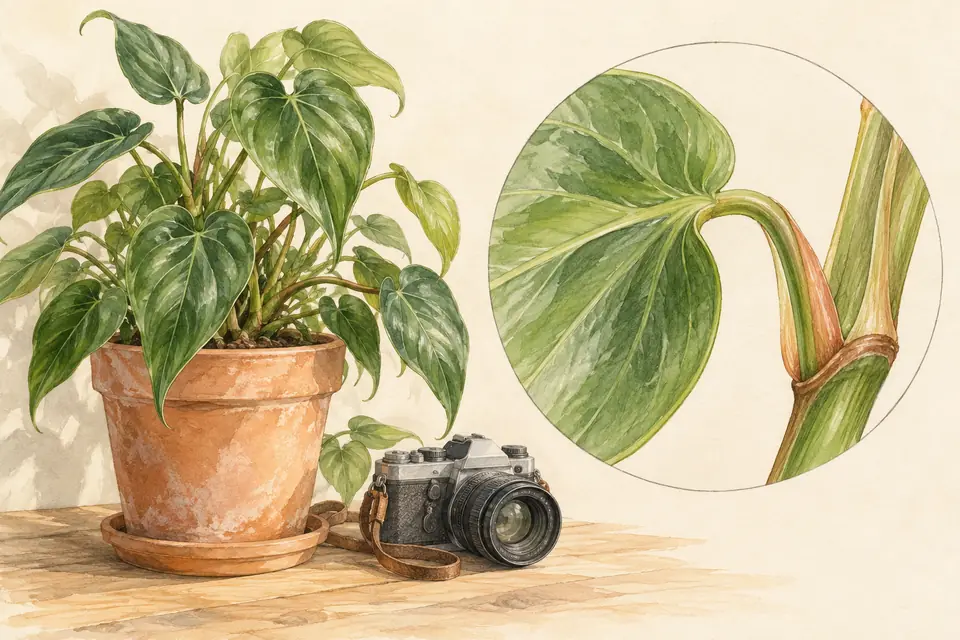
- Aerial roots: short roots along the stem grip bark, brick or fences. Wintercreeper, climbing hydrangea, English ivy and poison ivy use them.
- Tendrils: thin, coiling threads that grab supports. Grapes and passionflowers climb with tendrils.
- Scrambling: long stems that lean on other plants, sometimes with thorns, as in bougainvillea and climbing roses.
Common vines with oval leaves compared
| Vine | Leaves | How it climbs | Key clue |
|---|---|---|---|
| Japanese honeysuckle | Opposite, oval, smooth-edged; early leaves may be lobed | Twining, or trailing on the ground | Paired white flowers fading to yellow; black berries |
| Oriental bittersweet | Alternate, round to oval, toothed, glossy | Twining | Yellow capsules splitting to show red-orange fruit in autumn |
| Wintercreeper | Opposite, oval, toothed, often evergreen | Aerial roots | Pinkish capsules with orange-coated seeds; often carpets the ground |
| Climbing hydrangea | Opposite, broadly oval, toothed | Aerial roots | Flat clusters of white flowers; peeling cinnamon-brown bark |
| Star jasmine | Opposite, oval, glossy, smooth-edged | Twining | Fragrant white star-shaped flowers; milky sap |
| Carolina jessamine | Opposite, oval to lance-shaped, glossy | Twining | Yellow trumpet flowers in late winter and spring; highly toxic |
| Kiwi vine | Alternate, rounded to oval, often heart-shaped at the base | Twining | Reddish or hairy young stems; fuzzy or smooth fruit |
Morning glories and bindweeds also twine with alternate leaves, but their leaves are usually heart-shaped or arrow-shaped rather than truly oval. Their funnel-shaped flowers open in the morning and are an easy confirmation.
Is your vine with oval leaves poisonous or invasive?
Two groups need attention: poisonous vines and invasive ones.
- Carolina jessamine: an attractive native of the southeastern United States, but every part of the plant is highly toxic if eaten, and NC State Extension rates its poisoning severity as high. Keep children and pets away from the flowers and leaves.
- Japanese honeysuckle: its fruits can cause stomach upset if eaten in quantity. It is invasive in much of the eastern United States and smothers native plants.
- Oriental bittersweet: invasive in many eastern states, where its twining stems can girdle and topple young trees. It is often confused with the less aggressive American bittersweet, which carries its fruit at the tips of the stems instead of along them.
- Wintercreeper: sold as an ornamental groundcover, but invasive in parts of North America, where it spreads into woodland.
Check your local invasive plant list before planting or removing any of these. Rules and risk differ by region.
Seasonal clues: evergreen or deciduous
Watching the vine through a full year adds another reliable clue. Star jasmine, Carolina jessamine and wintercreeper keep their leaves through winter in mild climates, so a green, oval-leaved vine on a fence in January narrows the list quickly. Japanese honeysuckle is semi-evergreen and often holds some leaves through cold weather, especially in sheltered spots. Oriental bittersweet, climbing hydrangea and kiwi vines drop their leaves in autumn.
Bare winter stems still carry information. Bittersweet fruit often stays on the vine after the leaves fall, and the bright capsules stand out against bare branches. Climbing hydrangea shows its peeling, reddish-brown bark most clearly in winter. Old honeysuckle stems have shaggy bark that peels in long strips. If you find a vine in winter, mark it and come back in late spring, when new leaves and flowers make the identification much easier.
Flowering time helps as well. Carolina jessamine blooms from late winter into spring, Japanese honeysuckle flowers from spring into summer, and star jasmine flowers in late spring and early summer.
What kind of vine is this? A step-by-step check
- Rule out poison ivy. Count leaflets: three per leaf means leave it alone.
- Check leaf arrangement. Opposite pairs or one leaf at a time.
- Check the climbing method. Twining stem, aerial roots, tendrils or scrambling.
- Look at the leaf edge and surface. Toothed or smooth, glossy or dull, evergreen or deciduous.
- Find flowers or fruit. They usually confirm the identification. Note their colour, shape and where they grow on the stem.
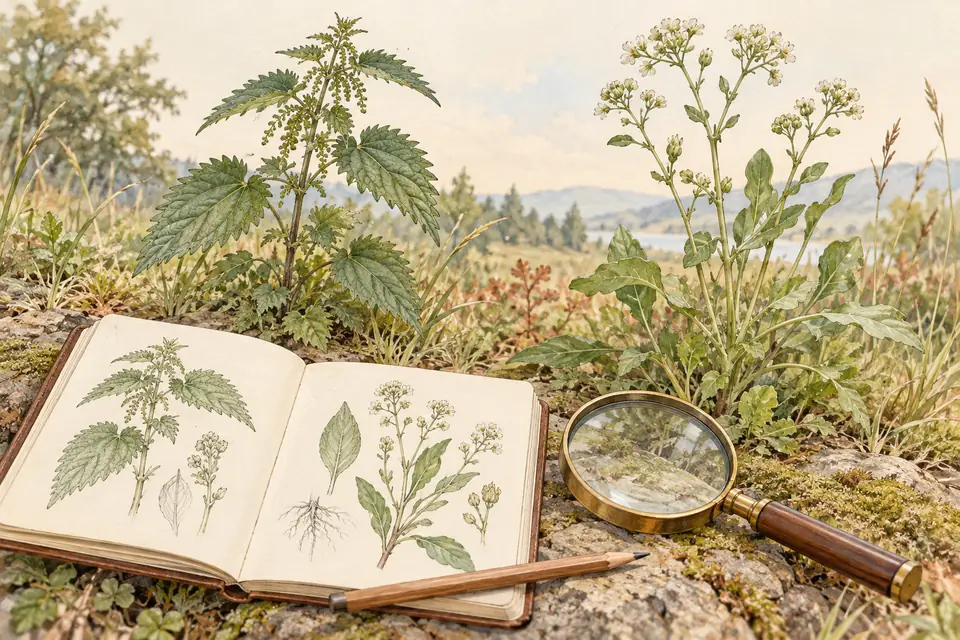
- Photograph a whole stem. Include several leaves, a node and any flowers or fruit, then compare with reference images.
Apps and reference photos work best with clear, complete pictures. The plant photo guide explains how to frame stems and leaves so the important details show.
Frequently Asked Questions
Answers to common questions about plant care and this tool.
Related plant guides and tools
View all guides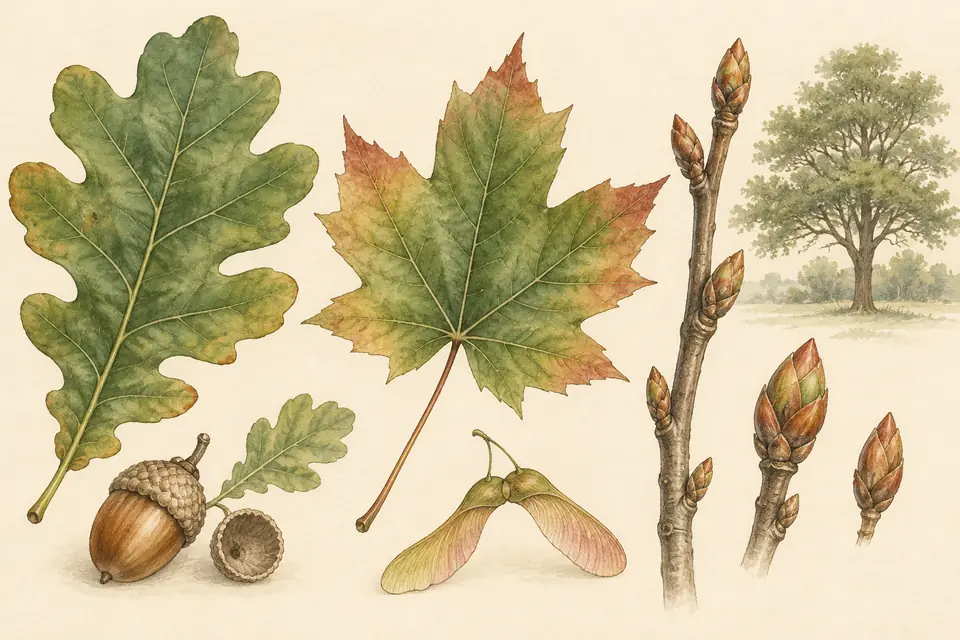
Further reading and references
- Lonicera japonica (Japanese honeysuckle) — NC State Extension Gardener Plant Toolbox Leaf arrangement, twining habit, fruit, toxicity notes and invasive status. [Source ]
- Celastrus orbiculatus (Oriental bittersweet) — NC State Extension Gardener Plant Toolbox Round to oval toothed alternate leaves, twining habit, fruit and invasive status. [Source ]
- Gelsemium sempervirens (Carolina jessamine) — NC State Extension Gardener Plant Toolbox Opposite glossy leaves, flowers, and high poisoning severity for all plant parts. [Source ]
- Toxicodendron radicans (poison ivy) — NC State Extension Gardener Plant Toolbox Three-leaflet leaves, aerial roots and skin rash risk. [Source ]