Why do cactus have spines? What those spikes do for the plant.
Cactus spines are modified leaves, and they do several jobs at once. Their best-known role is defense: they stop thirsty animals from eating a stem full of stored water. Spines also shade the stem from intense sun, slow the air moving across its surface so it loses less water, and in some species help collect water droplets from fog. Because the leaves became spines, the green stem took over photosynthesis, which is why most cacti look like leafless columns or pads.
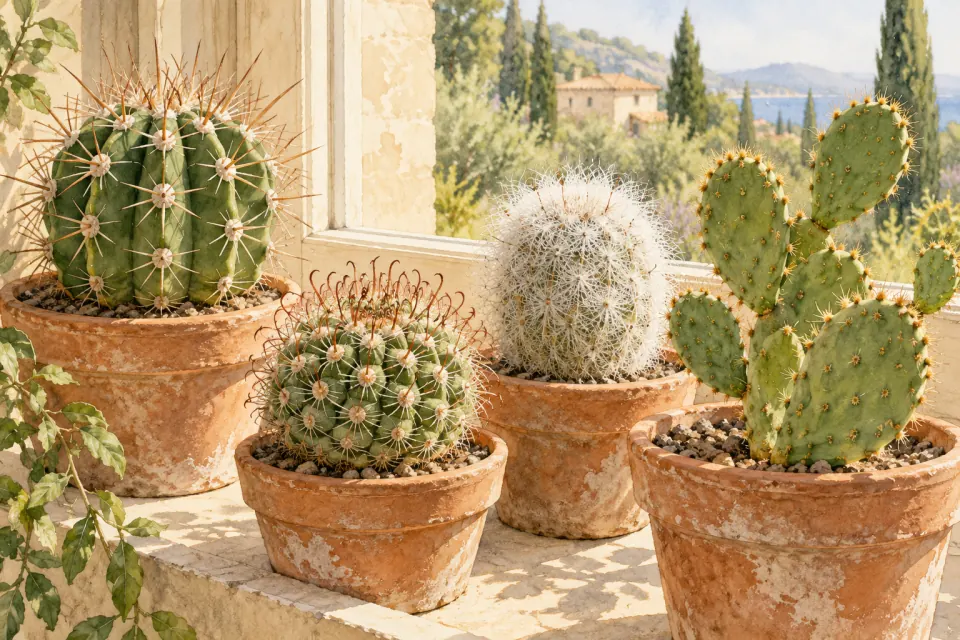
Cactus spines are leaves that changed
Most plants make food in broad, flat leaves, but a broad leaf in a desert loses water quickly. Over millions of years, most cacti reduced their leaves to spines and moved photosynthesis into the stem. The thick, green stem stores water, carries the chlorophyll, and has a waxy surface that holds moisture in.
The evidence that spines are leaves comes from where they grow and how they develop. Every cactus spine grows from an areole, a small cushion-like spot on the stem that is a very short side branch. Areoles are unique to cacti, and they also produce the flowers and new stems. On a leafy cactus such as Pereskia, you can see true leaves and spines growing from the same areoles, which shows the link between the two.
Spines are made of dense, dead cells once they mature. They contain no living tissue at that stage, which is one reason they are so hard and sharp.
Spines, thorns, and prickles are not the same thing
In everyday language people talk about cactus thorns, but botanists use three different words for sharp plant parts depending on what they grew from.
| Structure | Grows from | Examples |
|---|---|---|
| Spine | A leaf or part of a leaf | Cacti, barberry |
| Thorn | A shoot (a modified branch) | Hawthorn, citrus, honey locust |
| Prickle | The outer skin layer of the stem | Roses, raspberries, brambles |
A simple test helps with prickles: they snap off cleanly, often leaving a small scar, because they are only attached to the outer skin. Spines and thorns are part of the plant's structure and do not break away so easily. The distinction matters little in the garden, but it helps when reading a botanical description.
Why cactus have spines: the five main functions
- Defense against animals. A cactus stem is a store of water and food in a dry landscape, and spines make it hard for animals to bite into. Physical defense is the most widely cited function of spines, thorns, and prickles in plants generally.
- Shade. Dense spines, especially pale or white ones, cast a pattern of shade over the stem and reflect some sunlight. That can lower the temperature of the stem surface during the hottest part of the day.
- Less water loss. A coat of spines slows the movement of air right at the stem's surface. Still air holds more moisture, so the stem loses water more slowly than it would if the wind blew straight across it.
- Insulation. Some high-altitude cacti are covered in woolly, hair-like spines that help protect the growing tip from frost.
- Water collection. Research on the cactus Opuntia microdasys showed that its tiny barbed spines can collect water droplets from fog and move them toward the base of the spine, a mechanism described in a 2012 study in Nature Communications.
Not every cactus uses all five. A species from a foggy coastal desert may benefit from fog collection, while one from a hot, dry inland basin relies more on shade and reduced water loss.
Glochids: the tiny spines to watch out for
Prickly pears (Opuntia) and chollas (Cylindropuntia) have two kinds of spines. Besides the larger spines, their areoles carry tufts of glochids, very fine bristles covered in tiny backward-pointing barbs. Glochids come loose at the slightest touch and work into skin, where they are hard to see and cause irritation that can last for days.
To remove glochids, use tweezers for the visible ones, then press adhesive tape or a thin layer of white glue onto the skin and peel it off once dry. Rubbing the area spreads the bristles and makes things worse. When handling prickly pears, wear thick gloves or wrap the pad in folded newspaper, and do not touch your eyes.
Some chollas detach whole stem segments when brushed, which is why one species is nicknamed the jumping cholla. The segments cling to fur or clothing, fall off elsewhere, and can root, so the spines also help the plant spread.
For other plants with sharp or irritating parts, see the plant safety guide.
How spines differ across the cactus family
The cactus family has roughly 1,500 to 1,800 species, and they use spines in different ways.
- Prickly pears and chollas: the opuntias carry both large spines and glochids, and some have flat pads that are almost free of large spines but still covered in glochids.
- Columnar and globular cacti: most of the familiar barrel, column, and globe cacti have no glochids. Their spines can be very dense, as in many white-spined species, or few and strong.
- Leafy cacti: Pereskia and its relatives keep true leaves and also have spines, a reminder of how spines and leaves are related.
- Nearly spineless cacti: a few species, such as peyote and some star cacti, have very small spines or none on mature plants. They rely on other defenses, such as camouflage or chemicals in their tissue.
Spines also change as a cactus grows. Seedlings often have softer, more hair-like spines than adults, so a young plant can look quite different from the mature one.
Using spines to identify a cactus
Spines are one of the most useful features for identifying cacti, because their number, length, color, shape, and arrangement on the areole vary between species.
- Central and radial spines: many cacti have one or more stronger central spines surrounded by a ring of shorter radial spines. Count both.
- Shape: spines can be straight, curved, hooked, flattened, or hair-like. Hooked central spines, for example, are typical of many fishhook cacti.
- Glochids: tufts of fine bristles in the areoles point to a prickly pear or cholla.
- Color: spines may be white, yellow, red, brown, or black, and color can change with age.
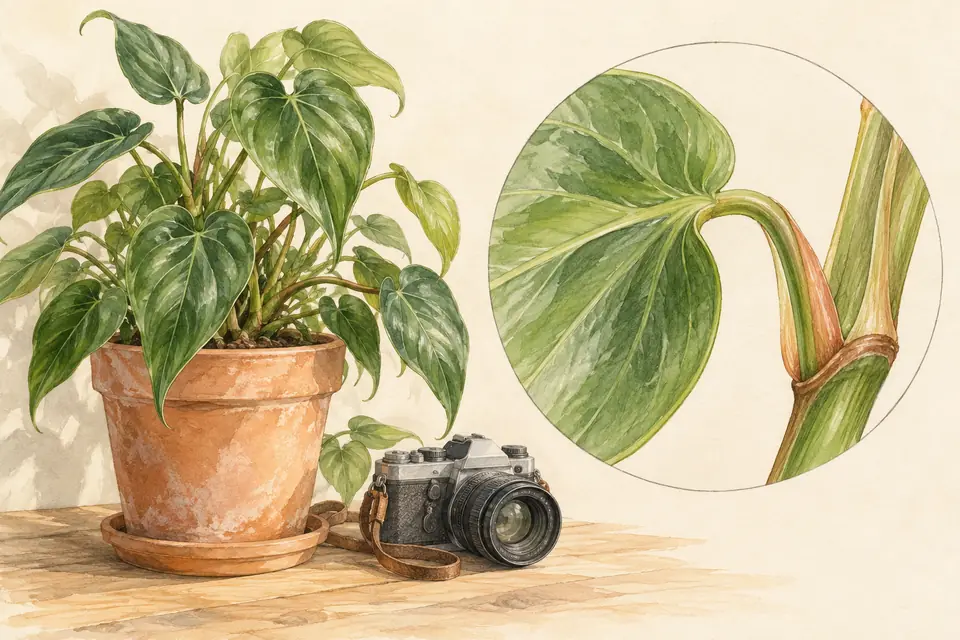
A close, well-lit photo of a single areole, plus a shot of the whole plant, is far more useful for identification than a distant picture. The plant photo guide covers how to photograph fine details.
Spines and cactus care
Healthy spines are a sign the plant is growing well, but they do not regrow once lost, so damaged spines stay damaged. New growth at the top of the plant produces new areoles and fresh spines. If new spines are thin and pale while older ones were strong, the plant may be short of light. The succulent and cactus care guide explains how much light, water, and drainage cacti need.
Frequently Asked Questions
Answers to common questions about plant care and this tool.
Related plant guides and tools
View all guides
Further reading and references
- Thorns, spines, and prickles — Wikipedia Botanical definitions of spines, thorns, and prickles and their functions, including defense and shading. A community-edited reference; check details against its cited sources. [Source ]
- Cactus — Wikipedia Areoles as the identifying feature of cacti and the origin of spines and flowers. [Source ]
- A multi-structural and multi-functional integrated fog collection system in cactus — Ju et al., Nature Communications (2012) Study showing how the barbed spines of Opuntia microdasys collect and move fog droplets. [Source ]