Grow succulents with the right light and watering.
Succulents store water in fleshy leaves or stems, but they are a diverse group. Start with the plant’s identity. Use this guide as a framework for many commonly grown dryland types, then check the requirements of your particular species.
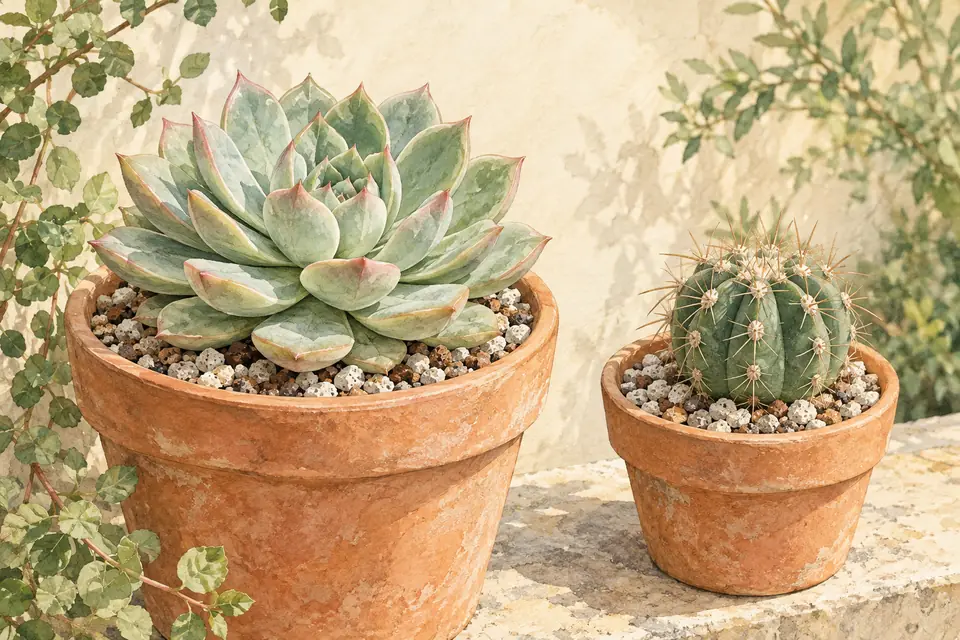
Desert types and forest types
Most succulents sold in shops come from dry regions. Aloe, Echeveria, Haworthia, jade plant (Crassula ovata) and most cacti belong here. They like strong light, a fast-draining potting mix and a dry spell between waterings.
A smaller group grows on trees in tropical forests. The Christmas cactus (Schlumbergera), orchid cacti (Epiphyllum) and Rhipsalis are examples. They prefer bright light without hot direct sun, more frequent watering and higher humidity. Treat them more like general houseplants than desert cacti.
This guide covers the desert types unless it says otherwise. If you do not know which group your plant belongs to, find its name first.
1. Find a suitable bright position
Many commonly grown succulents need substantial light to keep compact growth. Look at the actual plant position through the day rather than assuming every sunny-looking room is suitable. Window direction, shade outside, and the season all affect exposure.
Introduce stronger sun gradually, especially after bringing a plant home or moving it outdoors. A plant accustomed to shade can scorch. Follow the species’ temperature limits and bring tender plants indoors before conditions become unsuitable.
Long, weak growth and wider gaps between leaves can indicate inadequate light. This stretching is called etiolation. Better conditions may improve new growth, but old stretched stems will not shrink. Cutting off the top is a propagation choice, not a required first response.
Turn the pot a quarter turn every week or two. Plants on a windowsill lean toward the glass, and turning keeps growth even.
2. Give excess water a way out
Use a pot with drainage holes and a potting mix suited to the species. Potting mix is the growing material in the pot. A suitable packaged cactus mix can be a starting point; assess how it behaves in your container rather than assuming all commercial mixes are unsuitable.
Particle size, proportions, pot size, and growing conditions affect how long a potting mix stays wet. There is no one mineral recipe that fits every succulent. As one example, the RHS suggests 2 parts loam-based potting mix to 1 part horticultural grit by volume. Do not add rocks to a closed container and assume they provide drainage.
Unglazed clay pots lose water through their walls, so the potting mix dries faster than in plastic. Clay suits growers who tend to overwater. Plastic suits a hot balcony where pots dry out very fast.
For a mixed planting, group plants with similar water and light needs. Separate pots are easier to manage when one plant needs water while another is still wet.
Repot without harming the plant
- Repot in spring, when the plant starts to grow.
- Choose a pot only slightly larger than the root ball. Extra potting mix stays wet and can cause rot.
- Hold a spiny cactus with a folded band of newspaper or thick gloves.
- Loosen old potting mix from the roots and cut off any dark, soft roots.
- Plant at the same depth as before, in dry or barely moist potting mix.
- Wait about a week before watering, so damaged roots can heal.
3. Check before each watering
For dryland types that need a drying interval, check the potting mix beyond the surface and compare the pot’s weight. When water is needed, wet the root zone thoroughly and let excess water drain away. Empty the saucer or decorative outer pot.
Repeated light misting is not a substitute for watering established roots. Equally, do not wait for severe shriveling as a routine target. Soft or wrinkled leaves can have more than one cause; inspect the potting mix and plant before adding water.
| What changed? | What to reconsider |
|---|---|
| Less light or slower growth | The plant may use less water. Check the potting mix instead of keeping a summer watering interval. |
| More sun or outdoor warmth | The pot may dry faster. Check more often without automatically watering at every check. |
| A larger pot or fresh potting mix | Drying time can change. Observe the new setup before returning to your old routine. |
Seasonal growth and rest periods vary between species. For most desert cacti and succulents, the RHS advises a cool winter rest with very little water. Give only enough to stop the plant shriveling. The Christmas cactus is the reverse: it needs warmth and regular water in winter and rests in summer.
A worked example: a jade plant in two seasons
A jade plant in a 15 cm clay pot sits on a sunny east-facing sill. In June the potting mix dries in about a week, so it gets a thorough watering each time it is dry. In January the room is cool and the same pot stays damp for three weeks. Watering on the June schedule would keep the roots wet all winter.
Seasonal care in a Mediterranean climate
Hot, dry summers and mild, wet winters, as in Lebanon, suit many succulents well. Many people grow them outdoors on balconies and roofs for much of the year. The risks come from sudden changes.
- Summer sun: a plant moved from indoors can scorch in strong midday sun. Start with morning sun only, and increase exposure over one to two weeks.
- Summer heat: pots on hot tiles or against a sunny wall dry very fast. Check them more often, but still water only when the potting mix is dry.
- Summer rest: Aeonium grows mainly in the cool months. In summer heat it may close its rosettes and rest, so it needs less water then.
- Winter rain: days of rain can keep outdoor pots wet for weeks. Move them under cover or against a wall with an overhang.
- Cold nights: most succulents tolerate cool nights better when their potting mix is dry. Bring frost-tender plants indoors if frost is forecast, especially in mountain areas.
4. Feed and inspect thoughtfully
Many succulents need modest feeding during active growth. Check for fertilizer already in the potting mix and follow the product’s instructions for the plant. The RHS suggests a monthly liquid cactus feed or a high-potassium feed during the growing season. Extra fertilizer will not repair poor light or damaged roots.
Inspect leaf joints and stem surfaces for pests such as mealybugs and scale. Mealybugs look like small white tufts of cotton. Scale insects look like small brown or gray bumps that do not move. Soft, spreading damaged areas need closer investigation. Keep an affected plant apart while you check the cause; a photo alone cannot establish a disease.
| What you see | Likely cause | What to do |
|---|---|---|
| Soft, translucent or black leaves at the base | Too much water, or rot | Stop watering. Check the roots and cut away soft, dark parts. |
| Wrinkled, thin leaves in dry potting mix | Thirst | Water thoroughly and let it drain. Leaves usually firm up within a few days. |
| Wrinkled leaves in wet potting mix | Damaged roots that cannot take up water | Do not add water. Check the roots and repot in dry potting mix. |
| Pale or brown patches on the sunny side | Sun scorch after a sudden move | Give more shade for now. Scarred tissue will not recover, but new growth can. |
| Stretched stems and pale color | Too little light | Move to brighter light gradually. |
| White cottony tufts in leaf joints | Mealybugs | Separate the plant and identify the pest before treating. |
5. Propagate only with a suitable method
Some succulents grow from leaf cuttings, others from stem cuttings or offsets. Offsets are small new plants that form around the base of the parent. A method that works for one species may fail for another. Confirm the plant and the appropriate cutting method before removing healthy growth.
Use clean tools and protect yourself from spines or irritating sap. Some species need the cut end to dry before planting. Let it dry for as long as the cutting and conditions require. The RHS notes this can take from a day to a week. Rooting time varies; a fixed number of days is not a guarantee.
Keep cuttings in suitable light and medium, and adjust moisture for their rooting stage. Avoid repeatedly pulling them up to look for roots. New growth can help you track progress, but propagation is not always successful.
Take an Echeveria leaf cutting
- Hold a healthy lower leaf and twist it gently from the stem.
- Check that the whole leaf base came away. A torn leaf rarely roots.
- Leave it on a dry surface out of direct sun until the broken end dries.
- Lay it on top of a gritty potting mix.
- Keep the potting mix only slightly moist while roots form.
Handle spines and sap safely
Some common succulents are toxic to pets. The ASPCA lists jade plant and Aloe vera as toxic to dogs and cats. Keep plants out of reach of pets and young children. Never eat any part of a plant based on an app result.
Many Euphorbia species look like cacti but have a milky sap that irritates skin and eyes. Wear gloves and eye protection when you cut them, and wash your hands afterwards. If sap gets into an eye, rinse it with plenty of clean water and get medical advice. Call a poison center or a doctor if someone swallows part of a plant. Call a vet if a pet chews one.
Common mistakes and why they happen
- Watering a little and often. A small splash wets only the top of the potting mix, so the deeper roots stay dry while the surface stays damp.
- Keeping the summer routine in winter. Growth slows in cool, dim months, and the same water now sits around the roots.
- Buying plants with glued-on flowers or painted spines. The decoration can hide problems and does not help the plant.
- Moving a shaded plant straight into full sun. The leaves have not adjusted, and they scorch.
- Choosing a pot much larger than the roots. The extra potting mix stays wet for a long time.
Frequently Asked Questions
Answers to common questions about plant care and this tool.
Related plant guides and tools
View all guides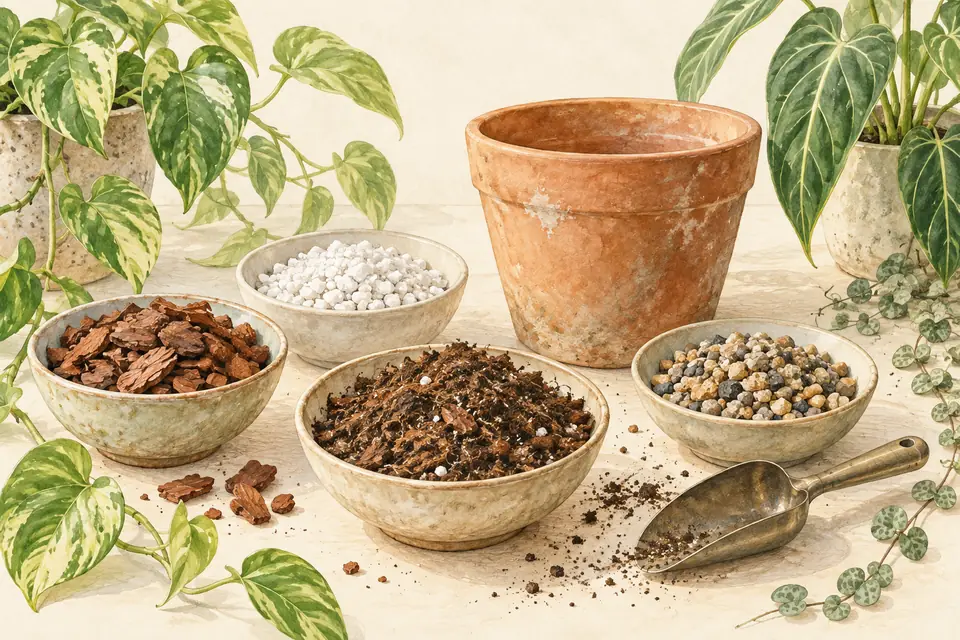
Further reading and references
- Cacti and succulents — University of Minnesota Extension General growing and propagation guidance, reviewed in 2026. Consult species-specific advice for exceptions. [Source ]
- How to grow cacti and succulent houseplants — Royal Horticultural Society Potting mix, winter rest, forest cacti, feeding, repotting, and drying cuttings before planting. [Source ]
- Jade plant — ASPCA Animal Poison Control Listed as toxic to dogs, cats, and horses. [Source ]
- Aloe — ASPCA Animal Poison Control Aloe vera is listed as toxic to dogs, cats, and horses. [Source ]