Cactus tree: which cacti grow tall enough to count as trees?
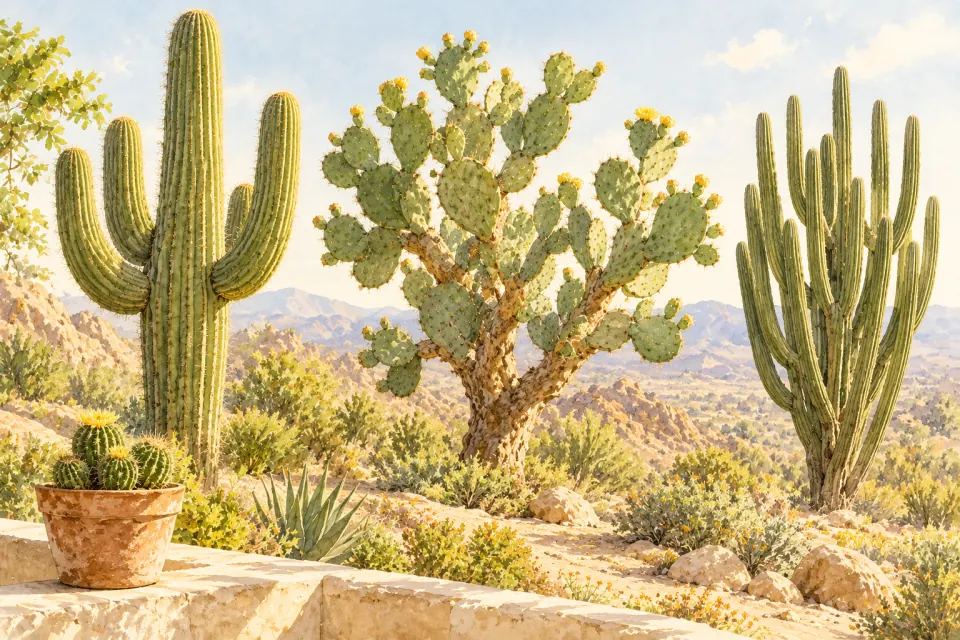
A few cacti grow like trees, with a single trunk and a crown of branches. Botanists call these cacti arborescent. The tallest are the cardón of Mexico, with one living specimen measured at about 19 meters, and the saguaro of the Sonoran Desert, which can pass 12 meters. Smaller tree cacti include several columnar Cereus species and the leafy cacti in the genus Pereskia. Some famous desert trees that look like cacti, such as the candelabra tree and the Joshua tree, are not cacti at all.
Is a cactus a tree?
Most cacti are not trees. The cactus family includes small round cacti, low creeping ones, climbing epiphytes, and shrubs. A smaller number grow into large plants with a clear trunk and branches above it, and these are described as arborescent, meaning tree-like.
There is no strict line between a tree cactus and a large columnar one. A columnar cactus is made of upright, cylinder-shaped stems that may or may not branch, without an obvious division into trunk and crown. A saguaro that has grown arms on a single stem looks like a tree; a young saguaro with no arms is simply a tall column. Botanists use the shape of the mature plant, not its height alone, to call a cactus tree-like.
Even the largest tree cacti store water in their stems rather than relying on leaves. Their trunks become woody near the base as they age, which gives them the strength to stand as high as a small building.
Tree cactus species compared
| Cactus | Native range | Typical form | Notable size |
|---|---|---|---|
| Cardón (Pachycereus pringlei) | Northwestern Mexico | Massive trunk with many upright branches | Tallest living cactus on record, about 19.2 m |
| Saguaro (Carnegiea gigantea) | Sonoran Desert, Arizona and Sonora | Single column, often with upturned arms | Can exceed 12 m; record about 23.8 m |
| Peruvian apple cactus (Cereus repandus) | Northern South America and the Caribbean | Tree-like with blue-green ribbed stems | Up to about 10 m |
| Tree prickly pears (Opuntia) | The Americas, including the Galápagos | Woody trunk carrying flat pads | Some species reach small-tree size |
| Leafy cacti (Pereskia and relatives) | Central and South America | Woody shrubs and small trees with true leaves | Several meters |
Cardón and saguaro: the giant cactus trees
The cardón (Pachycereus pringlei) of northwestern Mexico and Baja California is the bulkiest of all cacti. It forms a thick trunk that branches low into many upright arms, and a specimen measured at about 19.2 meters is recorded as the tallest living cactus. Its stems are heavy with stored water, and a large cardón can weigh many tonnes.
The saguaro (Carnegiea gigantea) is the cactus tree most people picture. It grows only in the Sonoran Desert of Arizona and northwestern Mexico, where it can live for well over a century. Saguaros grow very slowly from seed, and how fast they grow depends on rainfall. Many do not produce their first arm until they are several decades old, and some never branch. The tallest cactus ever measured was a saguaro without arms, about 23.8 meters tall, that fell in a windstorm in 1986.
Both species have pleated stems. The ribs let the stem swell like an accordion after rain and shrink again as the plant uses its stored water through the dry months.
Smaller tree cacti
Below the giants are cacti that still grow a trunk and branches but stay much smaller.
- Cereus: the Peruvian apple cactus (Cereus repandus) forms a tree-like plant with ribbed, blue-green stems up to about 10 meters tall, and it is grown for its edible fruit and as a hedge.
- Tree prickly pears: several Opuntia species develop a woody trunk with a crown of flat pads. On the Galápagos Islands, tree-like prickly pears are an important food source for tortoises and iguanas.
- Pereskia, Leuenbergeria, and Rhodocactus: these genera are the leafy cacti. They are woody shrubs and small trees with normal, flat leaves, and they look so unlike other cacti that most people do not recognize them as cacti until they see the areoles and spines on the stems.
The leafy cacti are interesting because they show what early cacti may have looked like before most of the family lost their leaves and moved photosynthesis into the stem.
Cactus trees that are not cacti
Several desert trees are called cactus trees even though they belong to other plant families. They share a similar look because they evolved to cope with the same heat and drought, a pattern called convergent evolution.
- Candelabra tree (Euphorbia ingens): a succulent tree from southern Africa, about 6 to 8 meters tall, with ribbed branches that curve upward. It is a euphorbia, not a cactus, and its milky sap irritates skin and eyes and is toxic.
- Joshua tree (Yucca brevifolia): a tree-sized yucca from the Mojave Desert with stiff, sword-shaped leaves.
- Ocotillo: a desert shrub with long, spiny, whip-like stems that leaf out after rain. It is not a cactus.
The reliable test is the areole. Every true cactus has areoles, small cushion-like spots on the stem from which spines, branches, and flowers grow. Euphorbias have spines or thorns directly on the ridges and bleed milky sap when cut; cacti usually have clear sap.
If you handle a tree-like succulent, treat any milky sap as a hazard and keep it away from your eyes. The plant safety guide explains which kinds of sap and spines need care.
Cactus trees and desert wildlife
Tree cacti are important to the animals that share their deserts. Saguaro flowers open at night and stay open into the next day, so both night and day visitors feed on them. The lesser long-nosed bat is the main night pollinator, drinking the rich nectar, while white-winged doves and honey bees visit during the day. Because the flowers form only at the top of the stem and the tips of the arms, a saguaro with more arms can produce more flowers.
The ruby red saguaro fruits ripen in early summer, each holding around two thousand small black seeds in sweet pulp. Birds, bats, and other desert animals eat the fruit, and the fruit has long been harvested by the Tohono O'odham people.
Woodpeckers also carve nest holes into the stems of large saguaros. The cactus seals the wound with hard scar tissue, and after the woodpecker leaves, owls and other birds often reuse the cavity.
Growing a tree cactus
Large tree cacti grow too slowly and too big for most homes, but several columnar species are sold as young plants. A young saguaro or Cereus will stay a small column in a pot for many years. They need full sun, a very free-draining gritty mix, and a dry, cool winter rest. Overwatering in winter is the most common way to lose them, because the stem rots from the base.
The succulent and cactus care guide covers soil, light, and watering for cacti grown in pots.
Frequently Asked Questions
Answers to common questions about plant care and this tool.
Related plant guides and tools
View all guides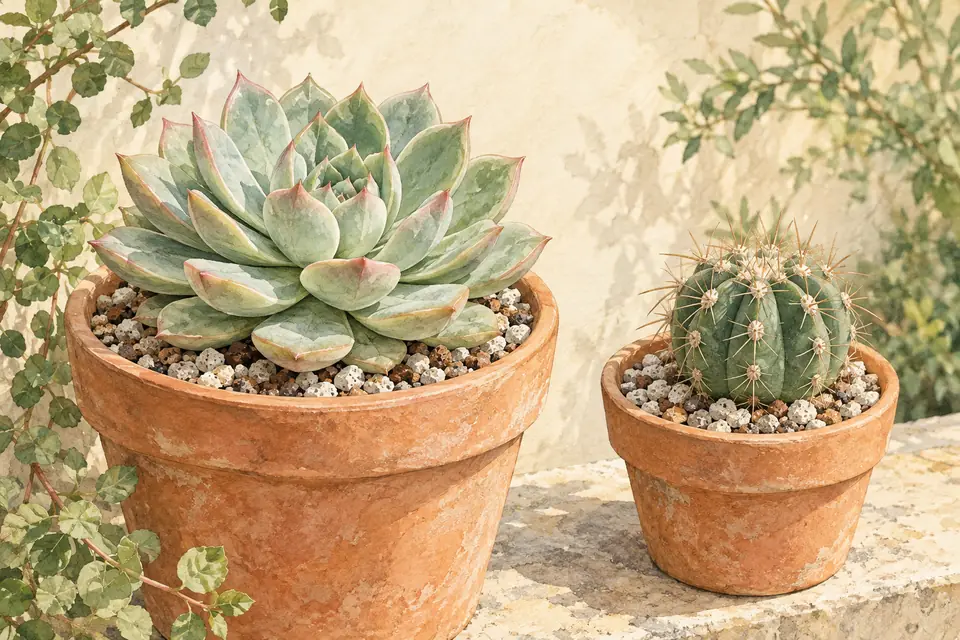
Further reading and references
- Cactus — Wikipedia Describes tree-like (arborescent) and columnar cactus forms and the leafy genera Pereskia, Leuenbergeria, and Rhodocactus. A community-edited reference; check details against its cited sources. [Source ]
- Pachycereus pringlei — Wikipedia The cardón, including the 19.2 m record for the tallest living cactus and the 23.8 m saguaro record. [Source ]
- Saguaro — Wikipedia Saguaro range, growth rate, branching, and lifespan. [Source ]
- Euphorbia ingens — Wikipedia The candelabra tree of southern Africa, a succulent euphorbia often mistaken for a cactus. [Source ]