Spot and manage common houseplant pests.
Look for the pest itself as well as leaf damage. Yellowing, curling, or spots can also come from growing conditions. A photo suggestion is a starting point for inspection, not proof that an insecticide is needed.
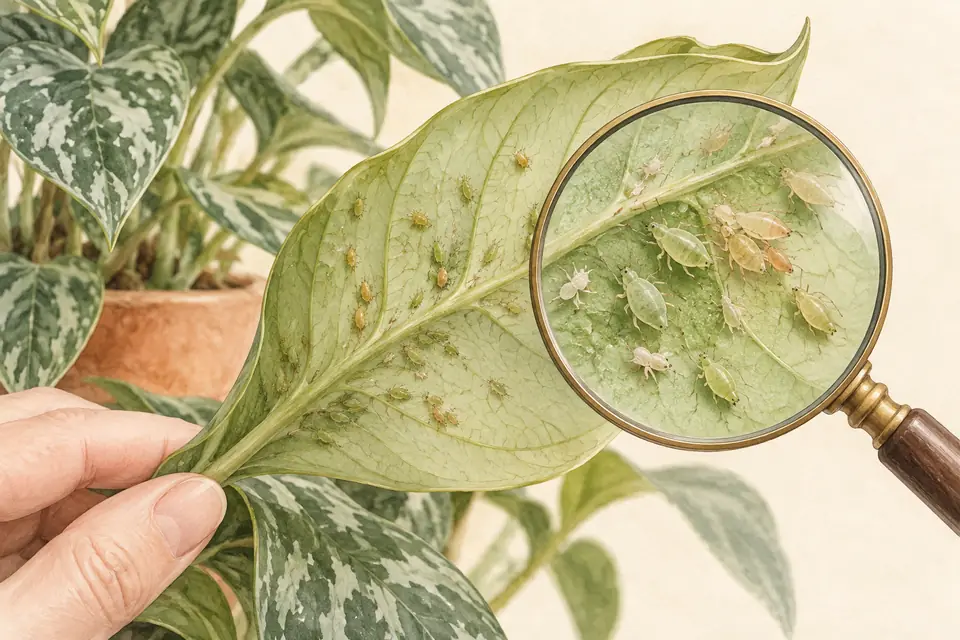
1. Check the whole plant
Inspect both leaf surfaces, new growth, stem joints, pot rims, and saucers. A hand lens helps with small pests. Photograph what you find and compare several features; dust, harmless insects, and natural leaf markings can be misleading.
| Possible pest | Clues to investigate |
|---|---|
| Spider mites | Tiny moving specks, pale stippling, and sometimes fine webbing, especially beneath leaves. Webbing alone does not identify a mite species. |
| Mealybugs | Small insects with white waxy coverings, often in leaf joints or along veins. Sticky honeydew may be present. |
| Thrips | Slender insects, silvery feeding scars, and small dark droppings. Inspect new leaves and flowers closely. |
| Scale insects | Attached shell-like or waxy bumps on stems and leaves. Soft scales can produce honeydew; armored scales do not. |
| Fungus gnats | Small dark flies near damp potting mix. Adults are mainly a nuisance; larvae live in the mix and can damage susceptible roots. |
| Aphids | Soft, pear-shaped insects in groups on shoot tips and buds. Look for sticky honeydew and pale shed skins. |
| Whiteflies | Tiny white winged insects that fly up when you move the leaves. Their young sit flat on leaf undersides, and honeydew may be present. |
Not every small animal in the pot is a harmful pest. Springtails, for example, usually feed on decaying material and rarely damage houseplants. Identification helps avoid unnecessary treatment.
Honeydew is the sticky, sugary liquid that sap-feeding insects such as aphids, mealybugs, soft scales, and whiteflies excrete. A black, sooty mold can grow on it. The mold does not feed on the leaf, but it blocks light.
2. Use integrated pest management
Integrated pest management (IPM) controls pests with the least risk to people, pets, and plants. It combines several methods and keeps pesticides as a targeted last step. For houseplants, IPM comes down to a few habits.
- Prevent: inspect every new plant before it joins your collection. Keep it apart while you check it for several weeks.
- Monitor: check leaves, stems, and the potting mix once a week. Yellow sticky cards show when flying adults appear.
- Identify: name the pest before you act. A 10× hand lens makes mites and thrips visible.
- Start gently: rinse, wipe, prune, or change care first.
- Use a pesticide only when gentler steps are not enough. Choose one whose label covers the pest, the plant, and indoor use.
After each step, check whether the pest numbers fell. If the pest returns, go back to identification. A wrong identification is a common reason why a control fails.
3. Start with practical controls
- Separate an affected plant from the others and inspect nearby plants. Keep checking new arrivals before placing them among your collection.
- For plants that tolerate it, gently wipe or rinse affected leaves, including their undersides. Support fragile foliage and avoid soaking a pot that is already wet.
- Remove heavily infested plant parts when the plant can tolerate pruning. Clean tools between plants and remove fallen leaves from the pot surface.
- Check again regularly. Eggs and hidden stages can survive an initial cleanup; one treatment or a fixed isolation period does not guarantee removal.
Keep a short record of where you found pests and whether new damage appears. Old scars may remain even after control improves. If a plant is badly infested, consider whether keeping it puts the rest of the collection at risk.
First steps for each pest
| Pest | First nonchemical steps | How to check progress |
|---|---|---|
| Spider mites | Rinse both leaf surfaces with lukewarm water. Wipe dust off the leaves, because mites thrive on dusty, dry foliage. | Hold white paper under a leaf and tap the leaf. Moving specks on the paper are live mites. |
| Mealybugs | Dab each insect with a cotton swab dipped in 70% isopropyl alcohol. Test one leaf first and wait a day for damage. | Check leaf joints and the edge of the root ball, because some mealybugs live on roots. |
| Scale insects | Scrape the bumps off with a fingernail or a soft toothbrush. Prune stems that are heavily covered. | Look for new bumps and fresh honeydew every week. |
| Thrips | Rinse the plant and remove infested flowers. Hang a blue or yellow sticky card near the plant. | Count adults on the card each week. |
| Aphids | Rinse or wipe the groups off. Pinch off shoot tips that are heavily infested. | Check shoot tips and buds every few days. |
| Whiteflies | Hang yellow sticky cards. Rinse the undersides of the leaves. | Count adults on the cards and look for young on the leaf undersides. |
| Fungus gnats | Let the top layer of the potting mix dry as far as the species allows. Use sticky cards for adults. | Press a chunk of raw potato, cut side down, onto the potting mix. After a few days, look for larvae under it. |
4. Manage fungus gnats at the pot
Fungus gnats or fruit flies? What to inspect
A small fly near a plant may come from the potting mix or somewhere else in the room. Check where adults gather and look for a breeding source before treating the plant.
| Possible insect | Where to investigate |
|---|---|
| Fungus gnats | Look for small, dark, slender flies around moist potting mix. Larvae live in the mix; flying adults may also rest on windows or walls. |
| Fruit flies | Check overripe produce, fermenting food or liquids, and waste containers. Their presence alone does not show that a plant needs treatment. |
Photograph an adult closely if possible. Location is a clue, but several small flies look alike. If you cannot identify it, ask a local extension service or pest specialist before choosing a pesticide.
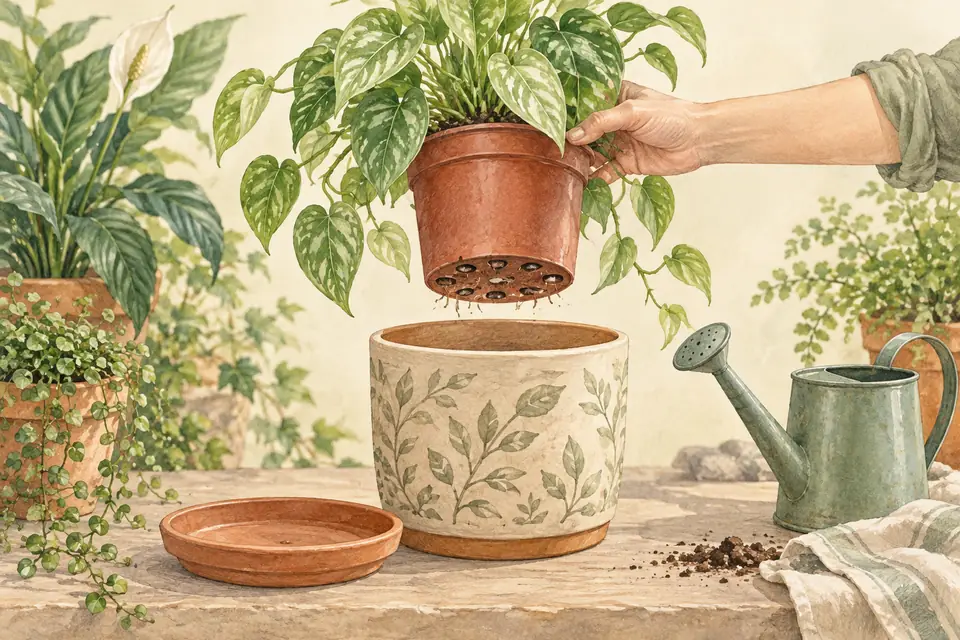
Check drainage and avoid keeping the mix wetter than the plant needs. Allow appropriate drying for the species; do not force a moisture-loving plant to dry deeply just to control flies. Remove decaying debris.
Sticky cards help monitor flying adults, but do not remove larvae in the mix. Keep traps away from children and pets. Where available, a product containing Bti and labeled for fungus gnat larvae can be an option; follow its directions and do not assume a mosquito product has the same permitted use.
Check Monstera leaves for thrips
Thrips can leave irregular silvery streaks and small dark droppings on leaves. Look for the slender insects as well as damage; a scar alone cannot confirm an infestation.
- Inspect both leaf surfaces and new growth with a hand lens. Take close-up photos of insects and affected areas.
- Separate a plant with suspected pests and inspect nearby plants.
- Record where damage appears. Compare new growth after cleaning or treatment; old scars may remain.
- Choose any pesticide by its permitted indoor use, plant, and pest. Follow the label’s repeat-treatment directions rather than a fixed online schedule.
5. Choose treatments by the label
If cleaning and care changes are insufficient, confirm the pest before selecting a product. Use only products labeled for the pest, the plant, and the intended indoor use in your location. Follow dilution, application, repeat-treatment, ventilation, and access instructions.
Insecticidal soap is a formulated pest-control product, not household detergent. Homemade soap-and-oil recipes can damage leaves. “Natural” does not mean harmless to plants, people, or pets, and different neem products are not interchangeable.
Do not mix products or increase the dose to speed results. Observe label cautions for sensitive or stressed plants. When identification or treatment choice is unclear, take close-up photos to a local plant adviser or extension service.
Use any product safely
- Read the whole label before you buy the product, and again before each use.
- Wear the gloves or other protection that the label lists.
- Keep children and pets out of the area for the time the label states. Cover or move aquariums and pet bowls before you spray.
- Do not use soaps or oils on a dry, wilting plant or in strong heat. UC IPM advises against them above 32 °C (90 °F).
- Store products in their original containers, out of reach of children and pets. Never put a product in a food or drink container.
- If someone swallows a product or gets it in the eyes, follow the first-aid section of the label. Contact a poison centre or emergency services, and keep the label with you.
6. Common mistakes, and why they happen
| Mistake | Why it happens | What to do instead |
|---|---|---|
| Spraying before the pest is named | Leaf damage looks alarming. | Find the pest with a hand lens and identify it first. |
| Treating only once | The adults disappear, so the job looks done. | Eggs and young often survive. Repeat as the label directs and keep checking. |
| Missing leaf undersides and stem joints | Most pests hide where you do not look. | Inspect and treat every surface the label allows. |
| Bringing a balcony plant indoors unchecked | Pests build up outdoors in summer. | Inspect and rinse the plant, then keep it apart for a few weeks. |
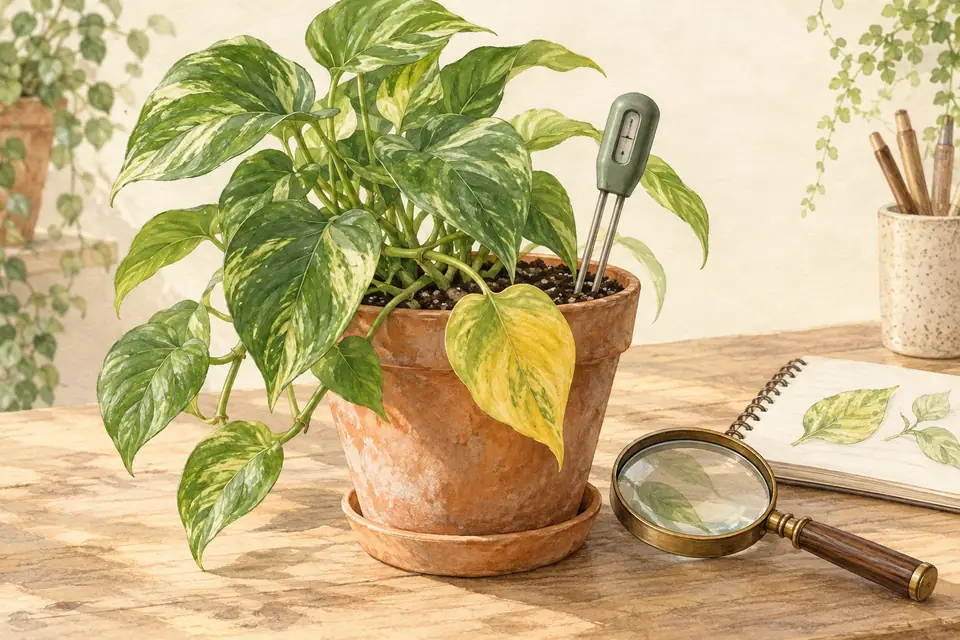
| Keeping the potting mix constantly wet | Fear of underwatering. | Water when the potting mix needs it. This also reduces fungus gnats. |
7. Seasonal notes for hot summers and mild, wet winters
Hot, dry weather favors spider mites, and they multiply fastest in summer. In a Mediterranean climate such as Lebanon’s, check leaf undersides weekly from late spring to autumn. Rinse dusty foliage now and then.
Plants that spend summer on a balcony or terrace often carry pests indoors in autumn. Inspect and rinse each plant before you bring it in.
In a mild, wet winter, potting mix dries slowly indoors. Fungus gnats increase when the top layer stays wet. Water less often while growth is slow, and empty saucers after watering. Mealybugs and scale insects can stay active all year on indoor plants, so keep up the weekly checks.
8. When to get expert help
Ask a local extension service, plant clinic, or experienced nursery for help in these cases:
- You cannot identify the pest after a close look with a hand lens.
- The pest returns after several rounds of careful control.
- Several plants in your collection are affected at the same time.
- The plant is edible, such as a herb, and you are thinking about a pesticide.
- A product label is unclear, or it does not list your plant or situation.
Bring a sharp close-up photo. If the service accepts samples, ask how to seal an affected leaf in a bag before you bring it.
Frequently Asked Questions
Answers to common questions about plant care and this tool.
Related plant guides and tools
View all guides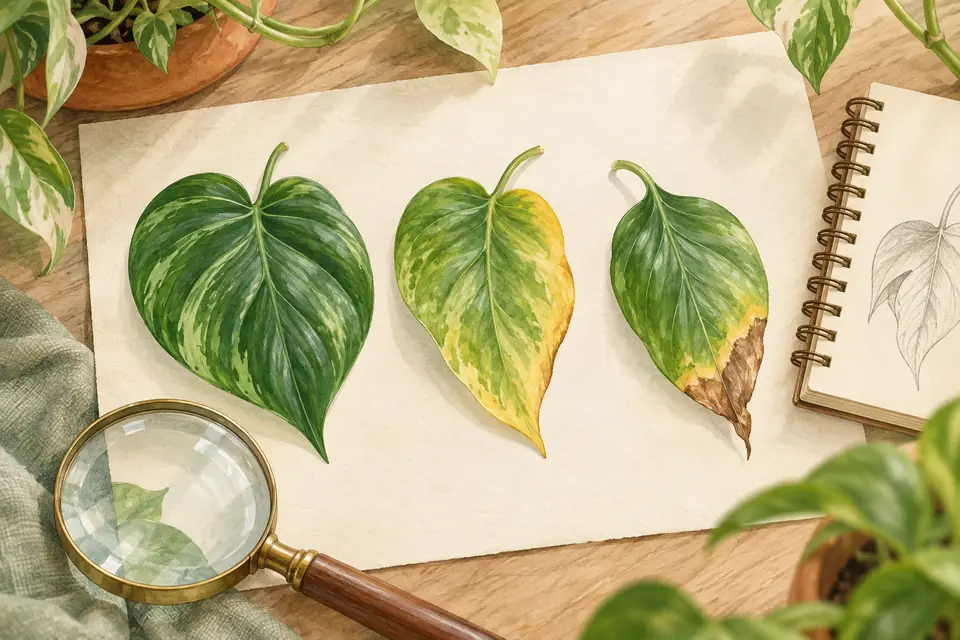
Further reading and references
- Insects on indoor plants — University of Minnesota Extension Identification features, nonchemical controls, and product precautions for common houseplant pests. Product availability varies by location. [Source ]
- Fungus Gnats — University of California IPM Adult and larval identification, moist growing media, and monitoring. [Source ]
- Fruit Flies — University of Maryland Extension Breeding sources associated with fermenting food and liquids. [Source ]
- What Is Integrated Pest Management (IPM)? — University of California IPM Definition of IPM and how prevention, monitoring, and targeted controls fit together. [Source ]
- Spider Mites — University of California IPM Hot, dusty conditions favor mites; soaps and oils should not be used on water-stressed plants or above 32 °C (90 °F). [Source ]
- Mealybugs — University of California IPM Dabbing mealybugs on houseplants with 70% or weaker isopropyl alcohol. [Source ]
- Reading Pesticide Labels — National Pesticide Information Center How to read the directions, precautions, and first-aid sections of a pesticide label. [Source ]