Understanding plant health suggestions.
Yellow leaves, brown tips, spots, and wilting can have several causes. Use a photo result as a lead to investigate alongside the plant’s conditions and history. It cannot replace a close inspection or confirm a disease.
1. Understand what the tools can tell you
The photo health feature requests automated suggestions from an external service. A result reflects patterns in the submitted image; it does not test roots, soil, or plant tissue. Poor focus, missing context, and similar-looking symptoms can lead to an incorrect suggestion.
The separate symptom checker uses your selected observations and fixed rules. It does not analyze an image. Both tools are starting points for investigation, and neither proves that a plant needs a pesticide, fungicide, or fertilizer.
A high score is not a guarantee, and an apparently healthy result cannot rule out a problem outside the photograph. If the service cannot return a result, that also says nothing about the plant’s condition.
Open the symptom checker2. Gather the missing context
- Identify the plant as accurately as you can and record when symptoms first appeared.
- Note recent watering, feeding, repotting, temperature changes, and moves to a different position.
- Inspect the whole plant and both sides of leaves. Look for actual insects, webbing, residue, or spreading damage.
- Check moisture below the surface and whether the pot can drain. Do not assume every wilted plant needs more water.
- Compare older leaves with new growth and photograph changes in similar lighting.
Record what you observe separately from what you suspect. “Three lower leaves yellowed this week and the mix is still wet” gives a specialist more useful information than an unconfirmed disease name.
To check moisture, push a finger 2 to 3 cm into the potting mix. You can also lift the pot to feel its weight. A pot that feels heavy several days after watering still holds plenty of water.
3. Treat visible patterns as clues
| Observation | Useful next check | What it cannot prove |
|---|---|---|
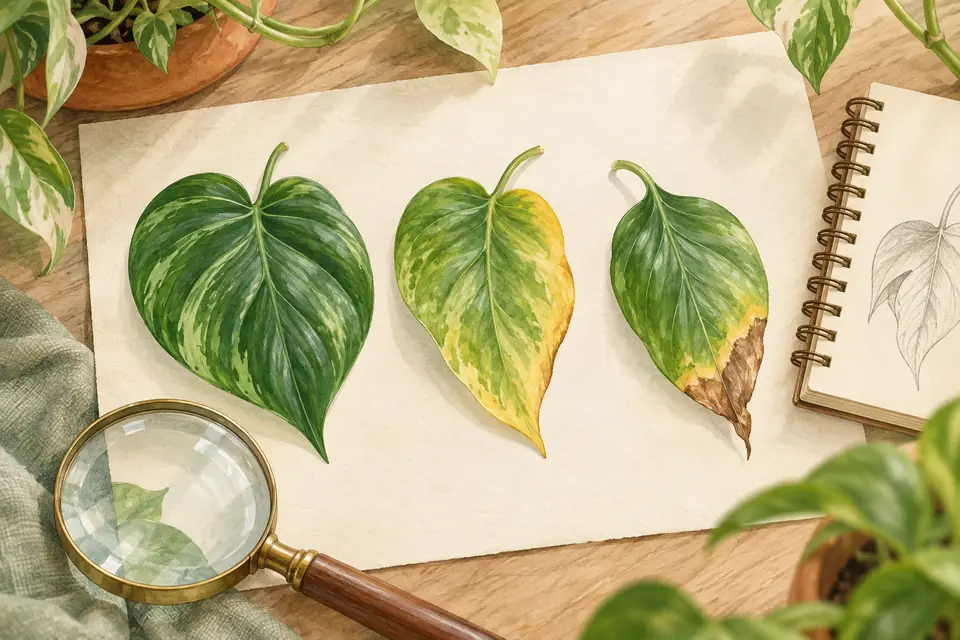
| Yellow leaves | Review moisture, light, leaf age, and recent changes. | A particular nutrient deficiency or watering problem. |
| Brown edges or tips | Review watering consistency, room conditions, and mineral deposits. | That low humidity or tap water is definitely the cause. |
| Leaf spots | Record whether spots spread and inspect both sides of the leaf. | The identity of a fungus, bacterium, or virus. |
| Sticky residue or webbing | Use a magnifier to look for pests and document what you find. | Which pesticide, if any, would be appropriate. |
| Wilting in wet mix | Check drainage, root condition, and temperature history. | A specific root pathogen or a need for more water. |
Symmetry, the age of affected leaves, and the position of spots can guide an inspection, but none reliably separates every disease from environmental stress. More than one problem can affect a plant at the same time.
Disease or disorder?
Plant specialists separate two kinds of problems. A disease comes from a living organism, such as a fungus, a bacterium, or a virus. A disorder comes from a nonliving cause, such as too much water, cold air, strong sun, or a chemical. A disorder cannot spread from plant to plant, but it can still damage the plant badly.
Most problems on houseplants start as disorders. Roots in wet, airless potting mix weaken, and then rot organisms can attack them. That is why care conditions come first in every check on this page.
4. Work through three real examples
A pothos on a north-facing sill in winter
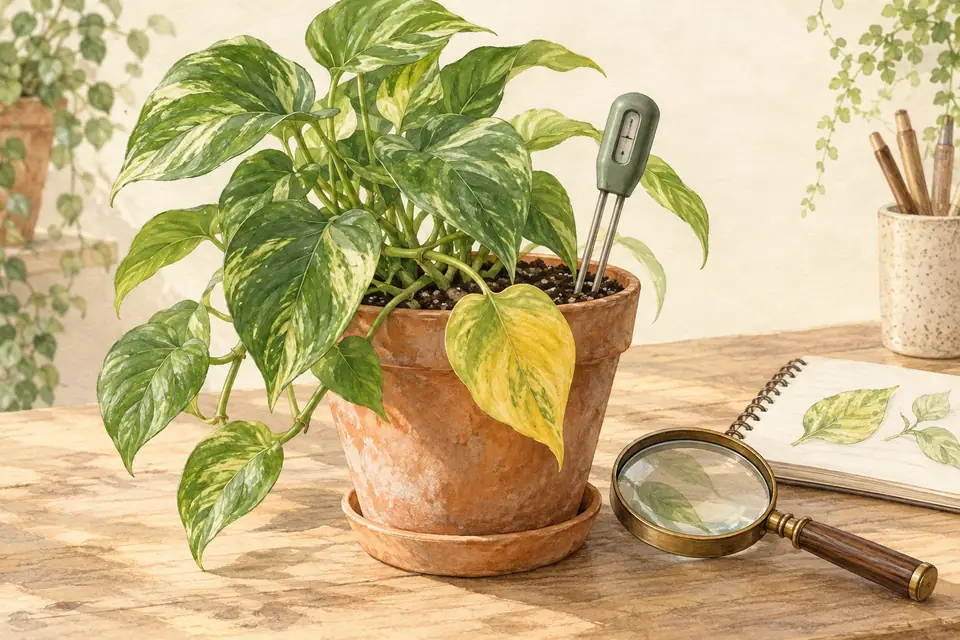
Three lower leaves on a pothos (Epipremnum aureum) turned yellow in January. The plant sits on a north-facing sill and gets water every Sunday. The potting mix still feels wet 3 cm down, five days after watering.
Short winter days slow growth, so the roots use less water than in summer. A fixed weekly routine now keeps the potting mix wet for too long. Water only when the top 2 to 3 cm feel dry. Move the pot to the brightest window you have. Then judge the result on the next new leaves, not on the yellow ones.
A calathea with crisp brown edges in August
A calathea near an air-conditioning unit develops brown, papery leaf edges. Its potting mix dries out completely between waterings.
Air conditioning and hot, dry summer air both lower humidity. Calatheas also react badly when the potting mix swings from wet to completely dry. Check the potting mix every two or three days in hot weather and keep it lightly moist. Move the plant out of the air flow. Trim the dead edges with clean scissors if you dislike them, because brown tissue will not turn green again.
Read the fern and calathea humidity guide
A fiddle-leaf fig that dropped leaves after a move
A fiddle-leaf fig (Ficus lyrata) dropped four leaves within two weeks of moving to a new room. The leaves had no spots, and there were no pests.
Figs often drop leaves after a sudden change in light or temperature. Check the new position for cold drafts, a heater blowing on the plant, or much lower light. Correct what you find, then leave the plant in one place. Each new move can cause more leaf drop.
5. Choose a measured response
If pests or a spreading disease are suspected, separate the plant while you investigate. Check nearby plants too. Avoid moving fallen leaves, used potting mix, or dirty tools between plants.
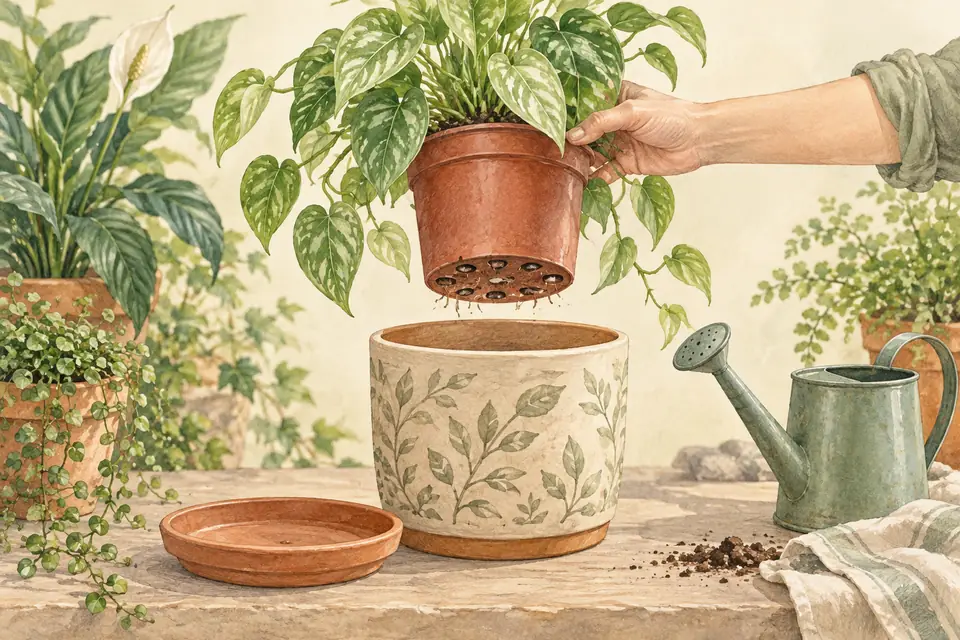
Correct a clear care problem when you find one, such as standing water in an outer pot or foliage touching a cold window. Make changes suited to the species and avoid several unnecessary treatments at once.
Identify the target before choosing a control product. Check that the label covers the plant, pest or disease, and intended indoor or outdoor use. Follow the instructions and precautions, especially around children, pets, and edible plants. “Natural” or “organic” does not mean suitable for every situation.
Do not mix household chemicals or use an unverified root bath based on an image result. Likewise, adding extra fertilizer is not a general cure for a stressed plant. If the diagnosis is uncertain, get advice before treating.
6. Common mistakes, and why they happen
| Mistake | Why it happens | What to do instead |
|---|---|---|
| Watering a wilted plant without checking the potting mix | Wilting looks like thirst. Roots damaged by wet potting mix also cause wilting. | Check the potting mix first. Water only if it is dry below the surface. |
| Feeding a pale or stressed plant | A pale plant looks hungry. | Fix light, water, and drainage first. Damaged roots cannot use fertilizer, and extra salts can harm them. |
| Changing several things in one week | You want the plant to recover fast. | Make one change at a time, so you can tell what helped. |
| Spraying on a guess | A product feels like action. | Identify the problem first. An insect spray does nothing for a watering problem. |
| Removing every damaged leaf at once | Damaged leaves look untidy. | Remove dead, rotting, or diseased leaves. Partly green leaves still feed the plant. |
7. Seasonal notes for hot summers and mild, wet winters
In a Mediterranean climate such as Lebanon’s, summers are long, hot, and dry, and winters are mild and wet. Each season brings its own common problems.
Summer
- Pots on balconies and sunny sills dry out much faster. Check the potting mix more often instead of watering on a fixed day.
- Spider mites multiply quickly in hot, dry, dusty conditions. Inspect the undersides of leaves every week.
- A houseplant moved outdoors can scorch in strong sun. Start it in shade and give it more sun over one to two weeks.
Winter
- Light falls and growth slows. The potting mix stays wet longer, so water less often.
- Leaves that touch cold window glass can develop damaged patches. Keep foliage a few centimeters away from the glass.
- Cool, damp, still air favors gray mold and some leaf spots. Space plants apart and remove dead leaves from the pot surface.
8. Know when to ask for help
Seek a local horticulturist or plant diagnostic service if damage spreads rapidly, several plants decline together, the problem returns, or the plant is especially valuable. For a tree with structural damage or falling branches, use a qualified local tree professional.
Send clear photos, the plant name if known, a description of the growing site, and your care history. Ask the service how to collect and package a sample before cutting or posting plant material; requirements and plant-movement rules vary by location.
After an appropriate change, track new symptoms and new growth rather than expecting damaged leaves to recover their original appearance. A short record helps you and a specialist decide whether the plant is improving.
A useful record needs only one line per check. For example: “12 March: two new leaves, no new yellowing, potting mix dry at 3 cm after six days.” Take a photo from the same spot each time.
Take useful plant health photosFrequently Asked Questions
Answers to common questions about plant care and this tool.
Related plant guides and tools
View all guides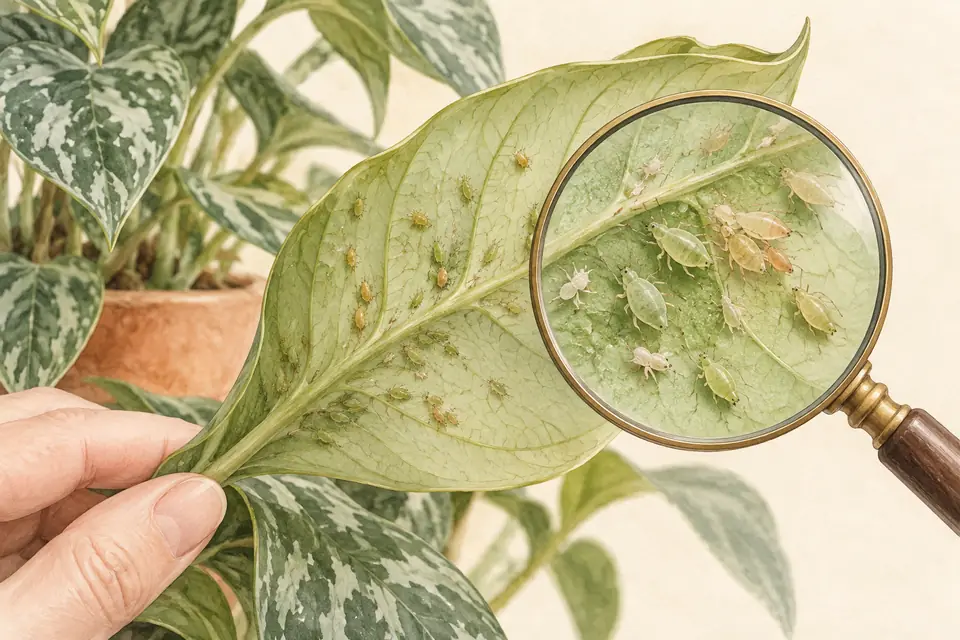
Further reading and references
- How to help a poorly houseplant — Royal Horticultural Society A practical sequence of checks for a struggling houseplant. This reference does not validate automated health predictions. [Source ]
- Diseases and Disorders (Extension Gardener Handbook, chapter 5) — NC State Extension Explains the difference between diseases and nonliving disorders, and a step-by-step diagnostic process. [Source ]
- Spider Mites — University of California IPM Hot, dusty conditions and water-stressed plants favor spider mite damage. [Source ]