Grow culinary herbs by giving each plant the conditions it needs.
A pot of rosemary and a pot of basil can sit side by side, but they need different watering. Start with drainage and light, then adjust care to the plant, season, and weather.
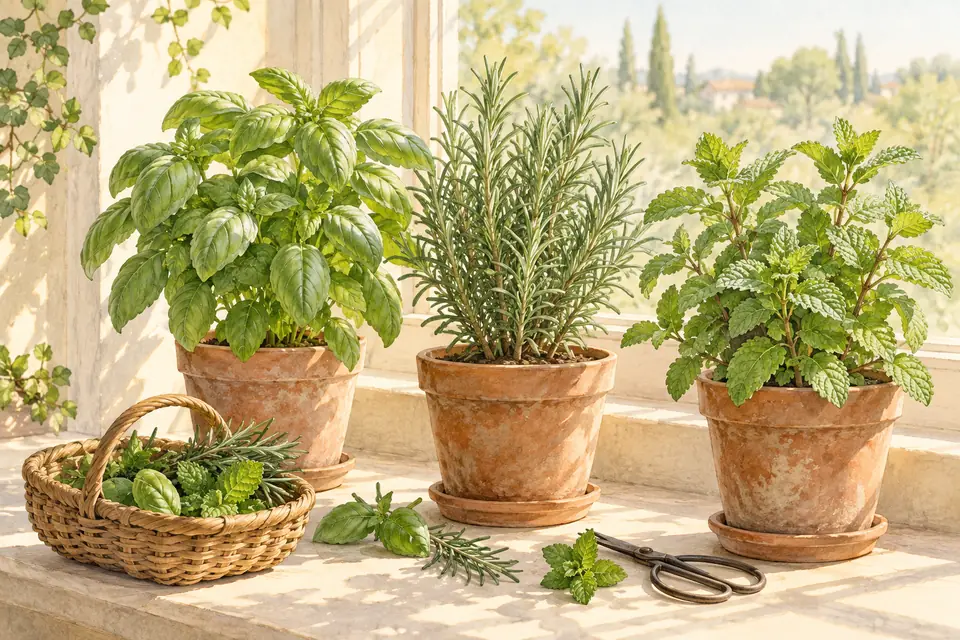
Choose a place and a container
Most culinary herbs grow best with several hours of direct sun. A container needs drainage holes and potting mix; garden soil in a pot can compact and drain poorly. Check the plant label and watch how quickly the mix dries in your climate.
Rosemary and thyme
Give these herbs a sunny place and well-drained mix. Water thoroughly, then let the upper mix dry before watering again. Keep pots from standing in water.
Basil and parsley
Use a fertile, well-drained mix. Water when the surface begins to dry; hot weather and small pots may call for more frequent checks. Basil is sensitive to cold.
Mint spreads readily in garden beds. A separate container helps contain it, but roots can escape through drainage holes if the pot sits on soil. Mint also needs regular water, especially in a container.
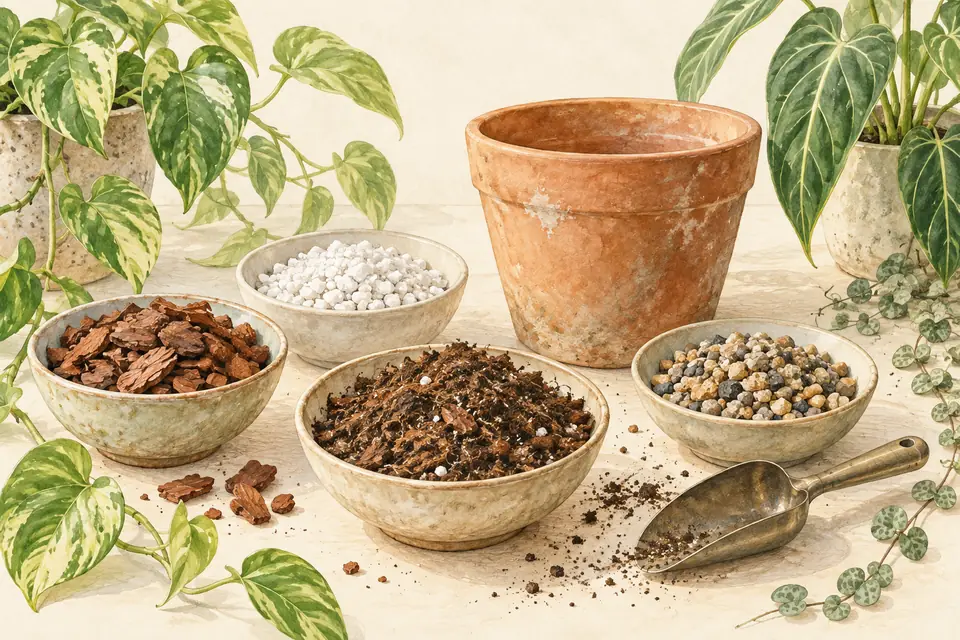
For pots, University of Maryland Extension suggests two parts soilless potting mix to one part perlite. Perlite is a light white mineral that keeps air spaces open in the mix.
Herbs at a glance
Many common herbs come from the Mediterranean region. They like full sun, well-drained soil, and dry summers. Others, such as mint and parsley, want more water and accept some shade.
| Herb | Life cycle | Light | Watering |
|---|---|---|---|
| Basil (Ocimum basilicum) | Annual, killed by frost | Full sun, warm and sheltered | Keep the mix lightly moist |
| Rosemary (Salvia rosmarinus) | Woody perennial | Full sun | Let the mix dry between waterings |
| Thyme, sage, and oregano | Perennials | Full sun | Let the mix dry between waterings |
| Mint (Mentha) | Spreading perennial | Sun to partial shade | Keep the mix moist |
| Parsley (Petroselinum crispum) | Biennial, grown for one year of leaves | Sun to partial shade | Keep the mix evenly moist |
| Coriander (Coriandrum sativum) | Fast annual | Sun; light shade in hot weather | Keep the mix moist |
| Chives (Allium schoenoprasum) | Perennial | Sun to partial shade | Keep the mix moist |
A biennial is a plant that lives for two years and usually flowers in the second. Parsley planted this year gives its best leaves before it flowers next year. In Lebanon, the plant gardeners call za’atar is usually Origanum syriacum, a relative of oregano. Grow it like oregano, in sun and well-drained mix.
Start from seed, cuttings, or young plants
- Basil: Sow seed after all danger of frost has passed. You can start picking leaves about 6 weeks after planting.
- Coriander: Sow seed where it will grow. The RHS notes harvests in as little as 10 weeks. Sow a small batch every month or so for a steady supply.
- Parsley: Sow seed in spring or autumn. It is slow to sprout, so keep the surface moist until seedlings appear.
- Mint: Root a stem cutting or divide an older clump.
- Rosemary, thyme, and sage: Buy young plants or take cuttings. Plant them in autumn or early spring so roots establish before summer.
Pinch out the tips of young plants to make them branch. A pinched basil plant grows bushy; an unpinched one grows tall and flowers early.
Water and feed for flavor
Water thoroughly, then let the potting mix dry a little before the next watering. Push a finger 2 to 3 cm into the mix: water rosemary, thyme, and sage when it feels dry at that depth. Water basil, parsley, mint, and coriander when the top just begins to dry. Water early in the day so leaves dry before night.
Go easy on fertilizer. Very fertile soil grows lush, soft leaves with less flavor. Herbs in pots may need a light feed during the growing season, because each watering washes some nutrients out of the potting mix.
Harvest without exhausting the plant
For basil, pinch or cut a growing stem just above a pair of leaves. New side shoots can then develop. Remove flower buds if your goal is a longer harvest of tender basil leaves. Other herbs can flower and still be useful; flowering is not a universal sign that leaves have become unsafe or unusable.
Take modest harvests from established plants and leave enough foliage for regrowth. Avoid a fixed percentage rule: a small seedling, a vigorous summer plant, and a woody perennial recover differently. Use clean scissors, and avoid cutting rosemary or thyme deeply into old bare wood.
Pick in the morning, after the dew has dried and before the heat of the day. For drying, cut leaves just before the flowers open. Basil loses much of its flavor when dried. Chop it, put it in an ice cube tray, cover it with water, and freeze it instead.
Care for herbs indoors
Put indoor herbs in the brightest suitable window and rotate the pot if growth leans toward the light. If stems stretch and new leaves stay small, a grow light may help; follow the lamp maker's distance and timing instructions rather than one setting for every lamp. Keep leaves away from hot glass and cold drafts.
Indoor pots often dry more slowly than outdoor pots. Feel the mix before watering, empty any saucer after drainage, and check leaves for pests. When moving plants between indoors and outdoors, change their sun exposure gradually to reduce leaf scorch.
A south- or west-facing window gives the most sun. University of Maryland Extension recommends at least 5 hours of sun a day for indoor herbs. In winter, it suggests grow lights for 14 to 16 hours a day to make up for short days.
Through the year in a Mediterranean climate
Hot dry summers and mild wet winters, as in coastal Lebanon, suit rosemary, thyme, sage, and oregano well. The tender herbs need more help.
- Autumn: Plant rosemary, thyme, and sage. Sow coriander and parsley, which prefer the cooler months.
- Winter: Wet roots are the main risk for rosemary, thyme, and sage. Raise pots on feet and move them under an overhang during long rains. Water less.
- Spring: Sow basil once nights are warm. Trim woody herbs lightly after their first flush of growth.
- Summer: Check pots every day. Give parsley, mint, and coriander afternoon shade. Unglazed clay pots dry fastest, so group them or use a larger size.
When an herb struggles
Yellowing leaves can have several causes, including wet roots, dry mix, low light, or a crowded pot. Check the mix and drainage first, then review light and recent temperature changes. A photo can suggest possibilities, but it cannot measure moisture below the surface or diagnose every problem.
| What you see | Likely cause | What to check | What to do |
|---|---|---|---|
| Lower leaves yellow; mix stays wet for days | Too much water or poor drainage | Drainage holes, saucer, mix 3 cm down | Water less often. Repot into fresh, open mix if it stays soggy. |
| Plant wilts at midday, recovers by evening | Heat and a small pot | Pot size and afternoon sun | Move to a larger pot or give afternoon shade. |
| Long, pale, leaning stems | Too little light | Hours of direct sun | Move to a brighter place, or add a grow light indoors. |
| Basil leaves turn dark after a cool night | Cold damage | Night temperatures | Bring basil in or wait for warmer nights before planting out. |
| Basil leaves yellow, with gray-purple fuzz underneath | Basil downy mildew, a disease of warm, wet, humid weather | Leaf undersides | Remove infected plants. Space plants for airflow. Try a resistant variety. |
| Coriander sends up flower stems early | Heat or dry mix | Season and watering | Harvest now and sow again in cooler weather. |
| Sticky leaves and clusters of small insects | Aphids | Stem tips and leaf undersides | Rinse them off with a strong spray of water. |
| Fine speckles and webbing on leaves in dry weather | Spider mites | Leaf undersides with a magnifier | Spray the leaves with a strong stream of water regularly. |
University of Maryland Extension notes that basil downy mildew does not harm people, so leaves from infected plants are safe to eat. For other pests, the common plant pests guide explains what to look for.
Herbs, pets, and safety
Not every herb is safe for every animal. The ASPCA lists basil, rosemary, and thyme as non-toxic to cats and dogs. It lists mint, oregano, and chives as toxic. Garlic and chives can damage red blood cells in cats and dogs. The guide to toxic plants for cats and dogs has the full table.
Rue (Ruta) is an old garden herb with a hidden risk. Its sap can cause blisters on skin that is then exposed to sunlight. Wear gloves and long sleeves when you trim it. Eat only herbs you planted or bought with a clear label. Never eat a plant from an unlabeled pot or a wild patch because it smells like a kitchen herb.
Frequently Asked Questions
Answers to common questions about plant care and this tool.
Related plant guides and tools
View all guides
Further reading and references
- Growing Herbs in Containers and Indoors — University of Maryland Extension [Source ]
- Growing Mint in a Home Garden — University of Maryland Extension [Source ]
- Growing Basil in a Home Garden — University of Maryland Extension [Source ]
- Growing herbs — Royal Horticultural Society [Source ]
- Herbs — Clemson Cooperative Extension Home & Garden Information Center [Source ]
- How to grow coriander — Royal Horticultural Society [Source ]
- Toxic and Non-Toxic Plant List — ASPCA Animal Poison Control Center [Source ]