Lantana plants: colors, trailing types, and how to choose one.
Lantana plants are sun-loving shrubs from the verbena family, grown for long-lasting, rounded clusters of small flowers in red, orange, yellow, pink, white, and purple, often several colours in one cluster. There are two types in most garden centres: common lantana (Lantana camara), an upright, bushy shrub, and trailing lantana (Lantana montevidensis), a low, spreading plant for baskets, walls, and groundcover. Choose by habit first, then colour. Before you plant, know that all parts are toxic to pets and livestock, and that common lantana has become invasive in many warm countries.
Lantana colors and why they change
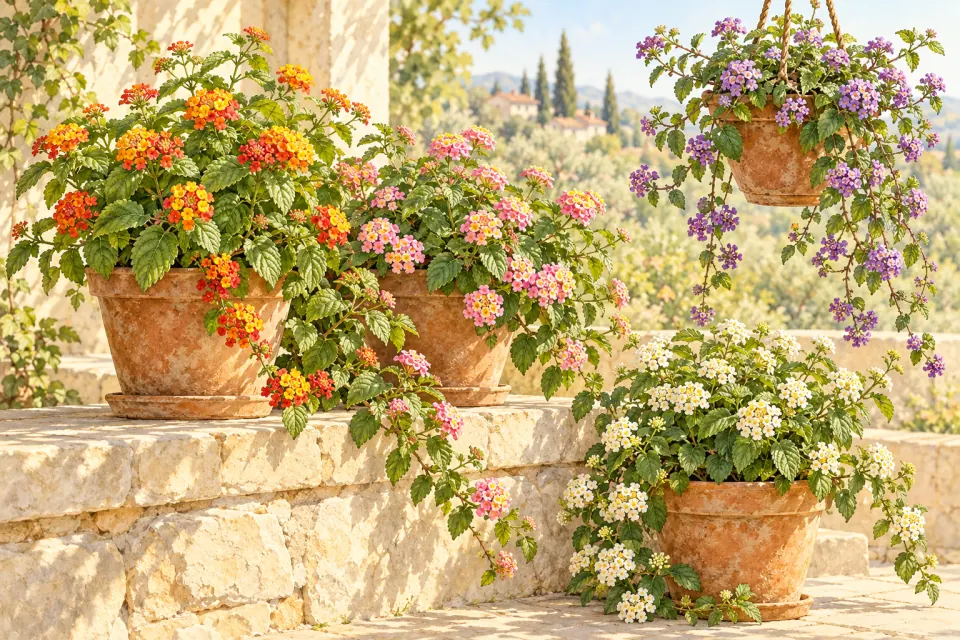
Each lantana cluster is made of many small tubular flowers with four petal lobes, packed into a flat or slightly domed head. The flowers in a cluster open from the outside towards the centre, which is why one cluster can show several shades at once.
Lantana flowers also change colour as they age. After a flower is pollinated it typically shifts from yellow to orange, pink, or red. This is thought to signal to pollinators which flowers still hold nectar, and it gives many cultivars their two-tone or three-tone look. The cultivar 'Anne Marie', for example, opens yellow and passes through orange to pink and fuchsia.
| Colour group | What it looks like | Good for |
|---|---|---|
| Yellow to red mixes | Yellow centres with orange and red outer flowers | Hot, bold borders and containers |
| Pink and yellow | Soft yellow centres, pink outer ring | Mixed plantings with softer colours |
| Solid yellow or gold | One clear colour that changes little | Contrast with blue or purple flowers |
| White | White flowers, often with yellow eyes | Evening gardens and calm schemes |
| Purple and lavender | Mostly trailing lantana | Hanging baskets and wall tops |
Trailing lantana vs common lantana
- Common lantana (Lantana camara): an upright, bushy shrub that usually reaches about 2 metres in warm climates and can scramble higher with support. Its stems are square and often prickly, and its leaves are rough, toothed, and smell strongly when crushed. It offers the widest colour range.
- Trailing lantana (Lantana montevidensis): a low, mat-forming plant with thin, hairy stems up to about a metre long. It spills over walls and pot edges and forms a groundcover on flat ground. Flowers are usually lilac, purple, or white, in smaller clusters on long stalks. 'Alba' is a well-known white trailing form.
- Hybrids: many plants sold today are crosses between the two, combining a compact or trailing habit with warmer colours. A trailing plant with yellow flowers is usually one of these hybrids rather than true Lantana montevidensis.
For a hanging basket, a window box, or the top of a retaining wall, pick a trailing type. For a hedge, a bold border, or a large container, pick an upright common lantana or a compact hybrid.
How to grow lantana
- Give it full sun. Lantana flowers best with six or more hours of direct sun a day. In shade it grows leggy and blooms little.
- Plant in well-drained soil. It tolerates poor, sandy, or rocky soil, but not waterlogged ground. In pots, use a free-draining mix and a container with drainage holes.
- Water until it establishes, then sparingly. Once its roots are settled, lantana copes well with drought. Plants in pots dry out faster and need checking in hot weather.
- Know your winter. Lantana is frost-tender. It stays perennial in mild climates, may die back and regrow after light frost, and is grown as a summer annual where winters are cold.
- Trim to keep it tidy. A light trim after a flush of flowers encourages new blooms. Removing spent clusters also removes the berries, which matters where lantana spreads into the wild.
Propagating lantana and common problems
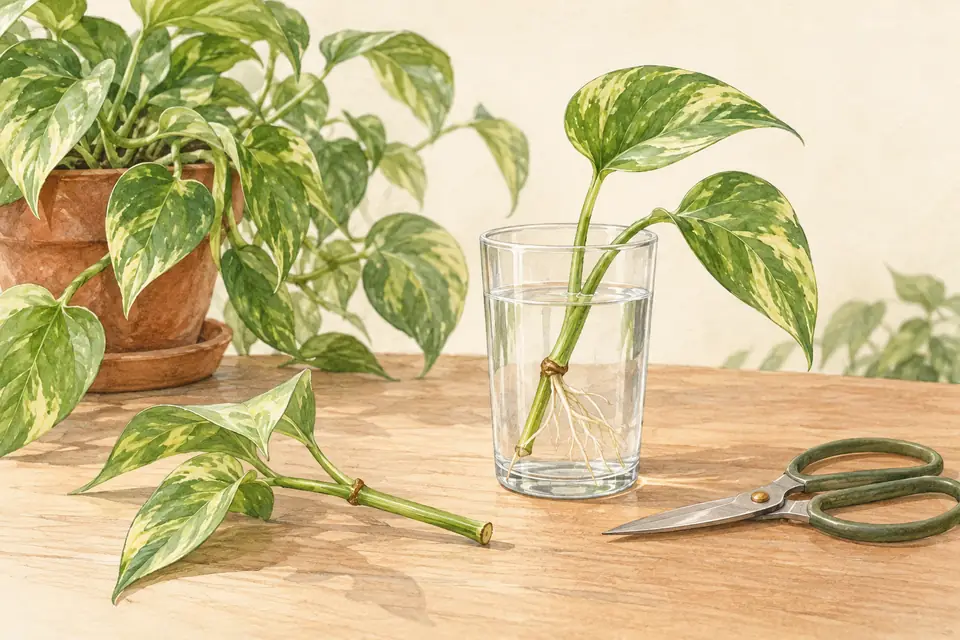
Lantana roots easily from softwood cuttings taken in late spring or summer. Cut a 10 to 15 centimetre piece of new growth just below a leaf joint, strip the lower leaves, and push it into moist, free-draining potting mix. Keep it warm and bright but out of harsh midday sun, and roots usually form within a few weeks. Cuttings keep the exact colour of the parent plant, which seed-grown plants often do not. Wear gloves, because the sap and leaves can irritate skin.
The most common problems come from too little sun, too much water, or crowded plants. Poor drainage leads to root rot, and still, humid air encourages powdery mildew on the leaves. Whiteflies, aphids, and spider mites can also build up, especially on plants in pots or under cover. Good spacing, morning watering at the base, and full sun prevent most of these.
Is lantana poisonous?
Yes. Lantana contains pentacyclic triterpenoids, including compounds called lantadenes, in its leaves, flowers, sap, and especially its green, unripe berries. The ASPCA lists lantana as toxic to dogs, cats, and horses. Eating it can cause vomiting, diarrhoea, weakness, and laboured breathing, and liver damage is more common in grazing livestock such as cattle and sheep, which can eat large amounts. Handling the leaves can also irritate sensitive skin.
In practice, most dogs and cats avoid lantana because of its strong smell and taste, but puppies and grazing animals are at risk. Plant it away from paddocks and from areas where young children play, and call your veterinarian or a poison control centre if berries or leaves have been eaten.
Lantana as an invasive plant
Common lantana is native to the tropical Americas but has escaped from gardens in around 50 countries. It appears on the IUCN list of 100 of the world's worst invasive alien species, and it forms dense thickets in Australia, India, South Africa, Hawaii, and parts of the Mediterranean and Middle East. A single plant can produce thousands of berries a year, and birds carry the seeds far from the garden.
If you garden somewhere lantana runs wild, check your local invasive plant list before buying. Some cultivars are sold as low-seed or sterile, so ask your nursery for those, deadhead regularly, and pull up any seedlings that appear nearby. Trailing lantana is generally less aggressive, but it can also spread in frost-free regions.
How to choose a lantana
- Start with the space: trailing for baskets and walls, compact hybrids for pots, upright common lantana for hedges and big borders.
- Pick colour from the cluster, not the label: look at older and newer clusters on the same plant to see how the colours shift as flowers age.
- Check pets and grazing animals: if a puppy, horse, or livestock can reach it, choose a different plant.
- Check where you live: in regions where lantana is invasive, choose a low-seed cultivar or a non-invasive alternative.
Frequently Asked Questions
Answers to common questions about plant care and this tool.
Related plant guides and tools
View all guides
Further reading and references
- Lantana camara — NC State Extension Plant Toolbox Description, growing conditions, cultivars, toxic principles, and symptoms of lantana poisoning. [Source ]
- Lantana — ASPCA Animal Poison Control Lists lantana as toxic to dogs, cats, and horses, with its toxic principle and clinical signs. [Source ]
- Lantana camara — Wikipedia Native range, flower colour change, and the spread of lantana as an invasive species. Community-edited; cross-check key facts. [Source ]
- Lantana montevidensis — Wikipedia Trailing lantana: habit, flower colour, and hybrids sold under its name. [Source ]
- 100 of the World's Worst Invasive Alien Species — IUCN Global Invasive Species Database The international list on which Lantana camara appears. [Source ]