Houseplant care basics: light, water, soil, and seasonal changes.
Start with the needs of your plant and the conditions you can offer. A useful routine is built around observation: how much light reaches the leaves, how the potting mix dries, and whether new growth looks healthy.
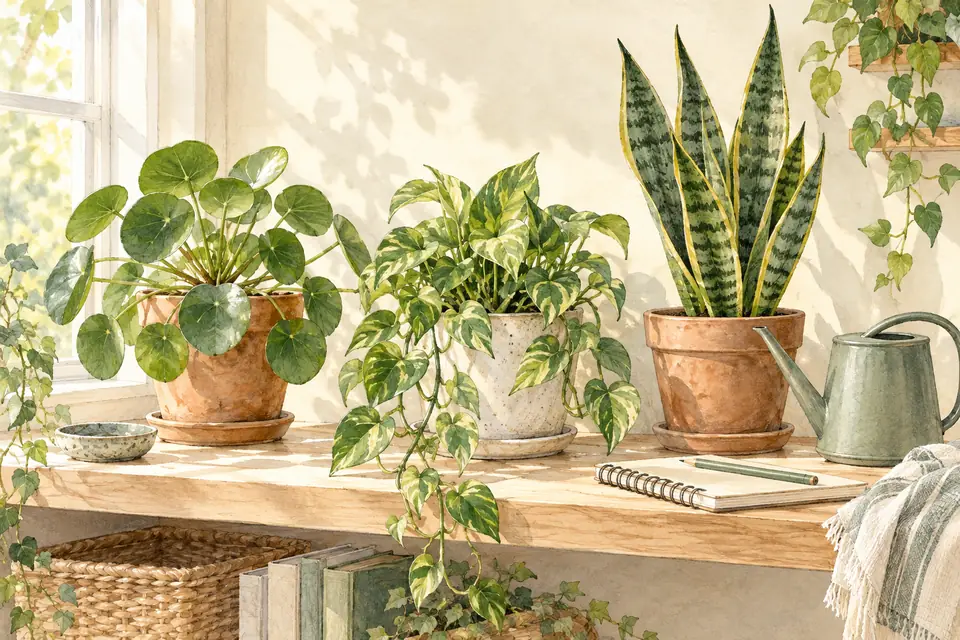
1. Identify the plant and choose its place
Keep the nursery label if you have one. A photo identification can suggest a name, but similar species may need different care. Confirm the name using several features and a reliable growing guide before making major changes.
Check the plant’s light, temperature, and moisture needs before choosing a room. A fern, a desert cactus, and a Mediterranean herb should not automatically share the same potting mix or watering routine. Keep plants that may be harmful out of reach of children and pets.
Choose a healthy plant at the shop
- Read the label before you buy, and choose a plant that suits the light in your home.
- Look under the leaves and at the stem joints for insects or webbing.
- Avoid a plant that wilts while its potting mix is wet. This can mean damaged roots.
- Tip the pot gently: roots should hold the potting mix together, not fall out loose.
- In cold weather, wrap the plant for the trip home.
2. Observe light where the leaves will be
A room that looks bright to your eyes can still provide little light to a plant. Look at the actual position through the day. Buildings, trees, curtains, window size, season, and your location all change what reaches the leaves.
Window direction is a clue, not a measurement. In much of the Northern Hemisphere, south-facing windows often offer more direct sun, while north-facing windows tend to be less sunny. The pattern differs in the Southern Hemisphere and near the equator. Distance from a window matters, but a simple inverse-square formula cannot reliably describe window light.
- Look for weak, stretched growth or unusually small new leaves, which can be clues to insufficient light.
- Watch for scorched patches after a move into stronger sun. Introduce major changes gradually and follow species-specific guidance.
- If using a grow light, follow its placement and operating instructions. Check the plant’s response rather than assuming one distance works for every lamp.
| Light level | What it looks like | Plants that often suit it |
|---|---|---|
| Direct sun | Sun falls on the leaves for several hours a day. | Most cacti and desert succulents |
| Bright, indirect light | Near a window, with a clear view of the sky but little or no sun on the leaves. | Monstera, Calathea, most ferns |
| Lower light | Further into the room. Shadows are faint or absent. | Pothos, ZZ plant, snake plant (they survive here but grow slowly) |
No houseplant grows in a room without daylight or a grow light. “Low-light” plants only tolerate less light than others.
Explore the light calculator3. Check moisture before watering
Use reminders to inspect your plant, not as automatic instructions to water. Check below the surface of the potting mix and learn how the pot feels as it dries. A dry surface can hide a wet root zone; a heavy pot or a moisture probe alone cannot tell the whole story.
When the plant needs water, moisten the potting mix evenly and allow excess water to drain. Empty the saucer or decorative outer pot. A layer of stones in a sealed pot does not provide a route for water to escape; use an inner pot with drainage holes.
Wilting does not always mean thirst. Both dry conditions and roots damaged in persistently wet potting mix can cause it. If the potting mix is still wet, inspect drainage and other symptoms before adding more water.
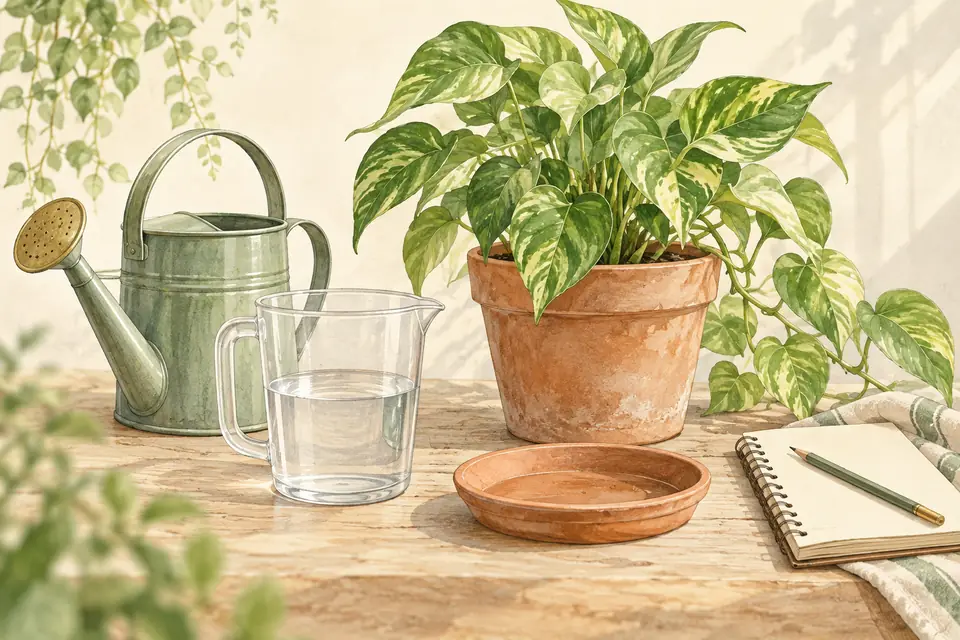
How to water well
- Use water at room temperature. Very cold water can shock roots, especially in winter.
- Pour slowly over the whole surface of the potting mix, not into one spot.
- Stop when water runs from the drainage holes.
- Let the pot drain for 10 to 15 minutes.
- Empty the saucer or decorative outer pot.
Do not use water from a salt-based water softener. Its salts build up in the potting mix and harm roots. If you go away for a week or two in winter, most plants in a cool room cope without water.
Open the watering worksheet4. Match the potting mix to the plant
Potting mix is the growing material in the pot. It is not garden soil, which packs down in a container and drains poorly. A commercial potting mix intended for your plant group can be a good starting point. Custom recipes are optional. Ingredient size, the pot, roots, and your watering habits affect how a potting mix behaves, so no single ratio suits every houseplant.
Choose a container with drainage and inspect whether repotting is actually needed. Roots filling the pot, difficult watering, or a deteriorated potting mix can be reasons to investigate. Follow guidance for the species rather than replacing the potting mix on a fixed schedule.
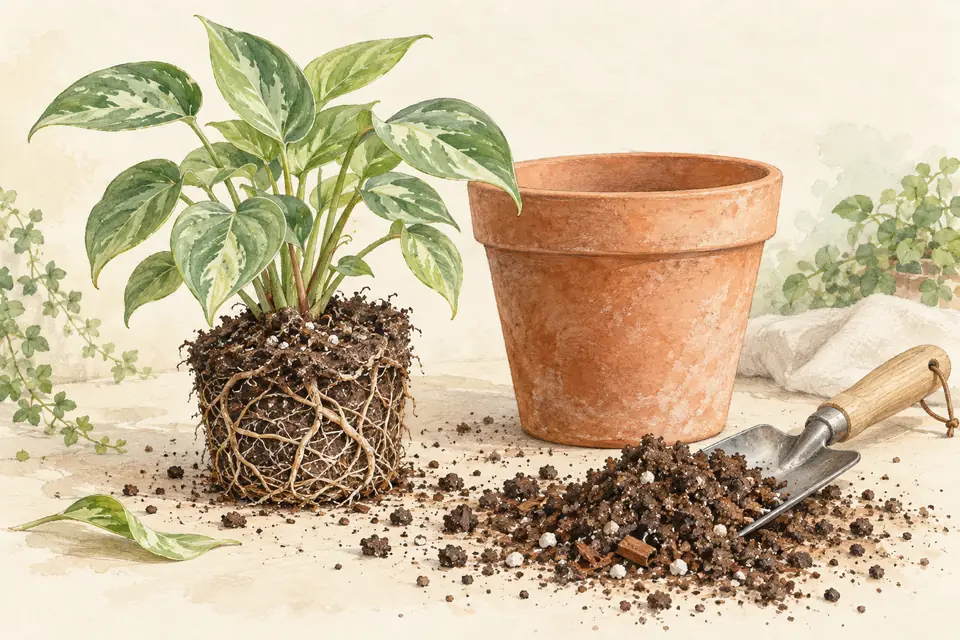
Repot step by step
- Repot in spring, so the plant can settle during the growing season.
- Water the plant a day before, so the root ball slides out more easily.
- Choose a pot with drainage holes, about 5 cm wider than the old one.
- Tease out circling roots gently and remove any that are dark and soft.
- Set the plant at the same depth as before and fill around it with fresh potting mix.
- Water to settle the potting mix, then keep the plant out of strong sun for a week.
Do not add fertilizer simply because a plant looks unwell. Check growing conditions and pests first. When feeding is appropriate, use the labeled amount and frequency for the plant and product.
Compare example potting mixes5. Adjust as seasons and rooms change
Heating, air conditioning, open windows, and seasonal sunlight can change a plant’s conditions. Keep foliage away from hot radiators and cold drafts. Check your species’ humidity needs; brown tips alone do not prove low humidity.
If using a humidifier, maintain and clean it according to its instructions and monitor the room rather than aiming for the same humidity for every plant. Occasional misting is not a reliable way to maintain a chosen room humidity.
When growth slows and the potting mix dries more slowly, watering may need to become less frequent. Do not automatically halve or double a schedule: check moisture each time. Plants under warm conditions and grow lights may continue growing when outdoor plants are resting.
Seasonal care in a Mediterranean climate
In a climate like Lebanon’s, summers are long, hot and dry, and winters are mild and wet. Many homes use air conditioning in summer and are only partly heated in winter. Both change how fast pots dry.
- Summer: check pots more often, because heat and dry air speed up drying. Keep plants out of the direct airflow of air conditioners and fans.
- Summer sun: strong afternoon sun through west-facing glass can scorch leaves. Use a sheer curtain or move plants back from the glass.
- Summer holidays: group plants away from windows and water them well before you leave. Ask someone to check them if you are away for more than a week or two.
- Winter: rooms can be cool and damp, and pots stay wet longer. Check before every watering and water less often.
- Winter nights: move tender plants away from cold glass, and keep them away from the hot air of portable heaters.
When to bring houseplants back indoors
Use the local nighttime forecast and your species’ temperature limits. A calendar date from another country may not fit your climate. Plan the move before cold weather can damage a tender plant.
- Choose an indoor position with suitable light and enough space before carrying the plant inside.
- Inspect leaf undersides, stems, pot rims, and saucers for pests. Clean the container and remove fallen plant debris.
- Keep a plant with suspected pests separate while you identify the problem. Check it again after the move.
- Adjust to the change in light gradually where weather permits. Avoid a sudden move into a much darker position.
- Check moisture before each watering. A pot may dry differently indoors, so its outdoor routine may need to change.
A short weekly inspection
- Look at new and old leaves, including the undersides, for changes or pests.
- Check moisture and drainage, and water only if your plant needs it.
- Note any change in light, temperature, or placement.
- Photograph a problem before changing care, then compare new growth over time.
If the plant declines rapidly or a problem keeps returning, ask a local horticulturist or plant diagnostic service. Bring the plant name, clear photos, and a record of watering and recent changes.
Read common warning signs
| What you see | Likely causes | What to check first |
|---|---|---|
| Several yellow lower leaves | Potting mix too wet, low light, or a crowded root ball | Moisture below the surface, and whether the pot drains |
| Wilting in dry potting mix | Thirst | Water thoroughly; the plant usually recovers within hours |
| Wilting in wet potting mix | Damaged roots | Root color and smell. Healthy roots are firm and pale. |
| Long, pale stems | Too little light | How far the plant is from the window |
| Brown, crisp leaf edges | Dry roots, dry air, heat, or fertilizer salts | Recent watering, nearby heaters, and feeding |
| Small flies around the pot | Fungus gnats, which breed in damp potting mix | Let the top of the potting mix dry more between waterings |
Keep children and pets safe
Some common houseplants are toxic if chewed. The ASPCA lists pothos and snake plant as toxic to dogs and cats, and spider plant as non-toxic. Check each plant by its botanical name. Place risky plants out of reach, and never eat any part of a plant because an app named it.
If a child chews a plant, call your local poison center or a doctor. If a pet does, call a vet. Keep the plant label or a photo to show them.
Common mistakes and why they happen
- Watering on a fixed day. Plants use less water in cool, dim weeks, so a weekly habit can keep roots wet.
- Choosing a plant for the look of the room. A plant placed where its needs are not met slowly declines.
- Using a decorative pot with no holes. Water gathers at the bottom unless you empty it after each watering.
- Feeding a sick plant. Fertilizer cannot fix wet roots or low light, and extra salts can add damage.
- Changing several things at once. If the plant improves or worsens, you cannot tell which change caused it.
Frequently Asked Questions
Answers to common questions about plant care and this tool.
Related plant guides and tools
View all guides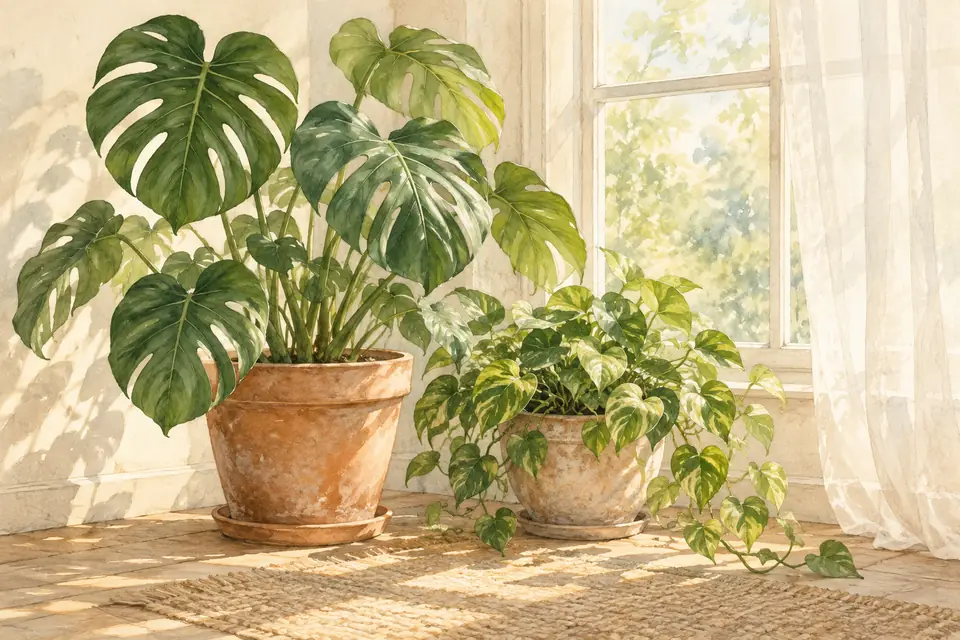
Further reading and references
- How to grow houseplants — Royal Horticultural Society General guidance on choosing compost, watering, feeding, and repotting houseplants. [Source ]
- How to help a poorly houseplant — Royal Horticultural Society Checks for light, water, temperature, and other causes of a struggling plant. [Source ]
- When to bring houseplants inside for the winter — University of Minnesota Extension Inspection and adjustment when moving plants indoors. Dates and temperature needs depend on location and species. [Source ]
- Golden pothos — ASPCA Animal Poison Control Listed as toxic to dogs and cats. [Source ]
- Snake plant — ASPCA Animal Poison Control Listed as toxic to dogs and cats. [Source ]
- Spider plant — ASPCA Animal Poison Control Listed as non-toxic to dogs and cats. [Source ]