Types of lemons: varieties compared for flavor and home growing.
Most lemons sold in shops are one of two types: Eureka or Lisbon, which taste almost the same and differ mainly in how the trees grow. For home growing, the Meyer lemon is the favourite because it stays compact and handles a little more cold, although it is a sweeter hybrid rather than a true lemon. Beyond these, regional varieties such as Italy's Femminello and Spain's Verna, novelty types such as the variegated pink lemon, and giant relatives such as Ponderosa and citron each have their own flavour and growing needs.
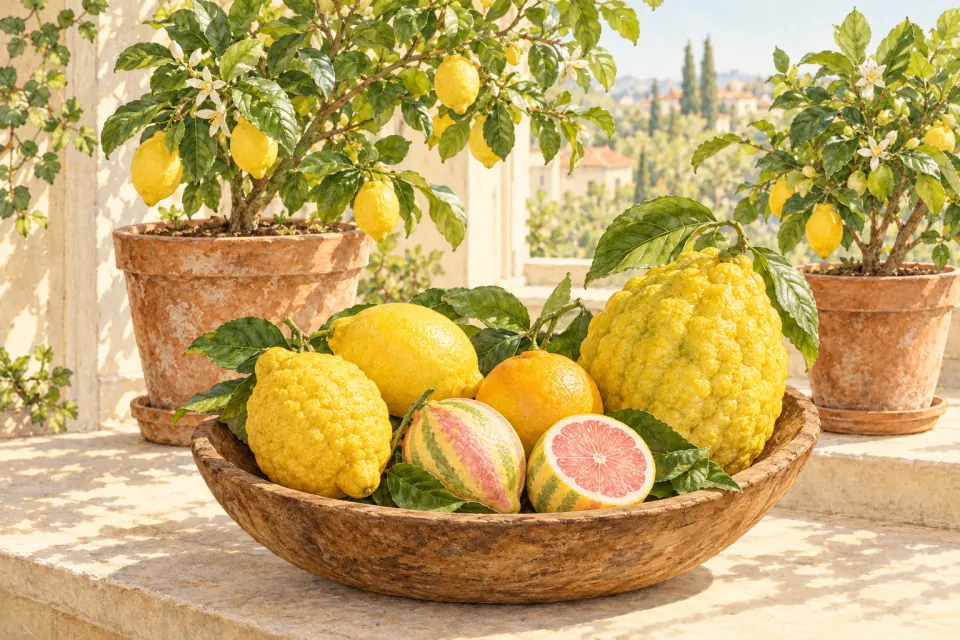
What a lemon is, botanically
The lemon, Citrus × limon, is itself a hybrid: genetic studies show it descends from a cross between citron and bitter orange. All lemon varieties share oval, pointed fruit with a nipple at the tip, sour juice high in citric acid, glossy evergreen leaves, and white flowers tinged with purple on the outside. Many varieties flower several times a year, so a tree often carries flowers, green fruit, and ripe fruit at once.
Because lemons are grown from grafted cuttings rather than seed, each variety is a clone with fixed traits. Differences between lemon types show up in the fruit's size, skin, seed count, and acidity, and in the tree's vigour, thorniness, and cold tolerance.
Lemon varieties compared
| Variety | Fruit and flavour | Tree | Best for |
|---|---|---|---|
| Eureka | Medium, textured skin, few seeds, very acidic | Nearly thornless, open, crops year-round | Mild climates, everyday use |
| Lisbon | Like Eureka, with smoother skin | Vigorous, thorny, dense, tougher in heat and cold | Hotter or harsher sites |
| Meyer | Round, thin orange-yellow skin, sweeter, less acidic | Compact, more cold-tolerant | Pots, cooler gardens |
| Femminello | Aromatic, oil-rich peel, juicy | Italian standard, several crops a year | Zest, limoncello |
| Variegated Pink Eureka | Green-striped skin, pale pink flesh, clear juice | Leaves splashed with cream | Ornamental pots |
| Ponderosa | Very large, thick skin, many seeds | Small, cold-sensitive | Novelty, indoor display |
Eureka and Lisbon: the supermarket lemons
Eureka and Lisbon dominate commercial lemon production in California, Australia, South Africa, and many other regions. In the kitchen they are interchangeable: both are bright yellow, very sour, and juicy.
- Eureka: the tree has few or no thorns and an open, spreading habit with fruit at the ends of branches, which makes picking easier. It flowers and fruits almost all year in mild climates but is more sensitive to cold, heat, and pests than Lisbon. Its fruit often has a short neck and slightly rough skin.
- Lisbon: a larger, denser, and very thorny tree that carries its fruit inside the canopy. It is more productive in hot inland areas and tolerates cold slightly better, and it crops mainly in winter and spring.
Both have selections with local names, such as Villafranca for a Eureka type and Yen Ben for a Lisbon type in Australia. If a nursery label just says "lemon", the tree is very likely one of these two.
Meyer lemon: sweeter and easier to grow
The Meyer lemon (Citrus × meyeri) is a natural hybrid from China between citron and a mandarin and pomelo cross. The agricultural explorer Frank Meyer brought it to the United States in 1908. Its fruit is rounder than a true lemon, with thin, smooth, deep yellow skin that turns slightly orange when fully ripe. The juice is less acidic and has a sweet, floral flavour that cooks value for desserts and dressings.
The tree is naturally compact, starts fruiting young, and survives a few degrees more frost than Eureka or Lisbon. Older Meyer trees carried a virus that could spread to other citrus, so plant the certified Improved Meyer selection, released by the University of California in 1975. The thin skin makes Meyer lemons soft and short-lived in storage, which is why they are less common in shops than in gardens.
Mediterranean and specialty lemon types
- Femminello: the main lemon of southern Italy, valued for its fragrant, oil-rich peel. Its forms include the Sfusato Amalfitano of the Amalfi coast and the lemons of Sorrento, both used for limoncello.
- Verna: the main Spanish variety, with few seeds and a long harvest season from late winter into summer.
- Variegated Pink Eureka: a Eureka sport with green-and-cream leaves and young fruit striped green and yellow. The flesh is pale pink, but the juice is clear and the flavour is a normal lemon.
- Ponderosa: probably a cross between a citron and a lemon, with very large fruit that can weigh more than a kilogram, thick skin, and many seeds. It is cold-sensitive and grown mostly as a curiosity.
- Citron (Citrus medica): not a lemon but one of its parents. Its fruit is mostly thick peel with little juice, used candied, and the Buddha's hand citron splits into finger-like segments.
Rough lemon and Volkamer lemon are also lemons, but they are grown mainly as vigorous rootstocks for other citrus rather than for their fruit.
Growing lemon types at home
Lemons are among the most cold-sensitive citrus. In regions with frost, grow them in containers and bring them into a bright greenhouse, conservatory, or cool, sunny room for winter, then move them outside to a sunny, sheltered spot in summer.
- Light. Give at least six hours of direct sun in the growing season and the brightest possible spot in winter.
- Compost and drainage. Use a free-draining citrus or loam-based compost in a pot with drainage holes.
- Watering. Water thoroughly, then let the surface dry partly. In winter, err on the dry side: overwatering is a common cause of yellowing and leaf drop.
- Feeding. Use a citrus fertiliser through the growing season, and a winter formula if the plant is still growing.
- Pollination. Lemons are self-fertile, so a single tree can fruit on its own, even indoors.
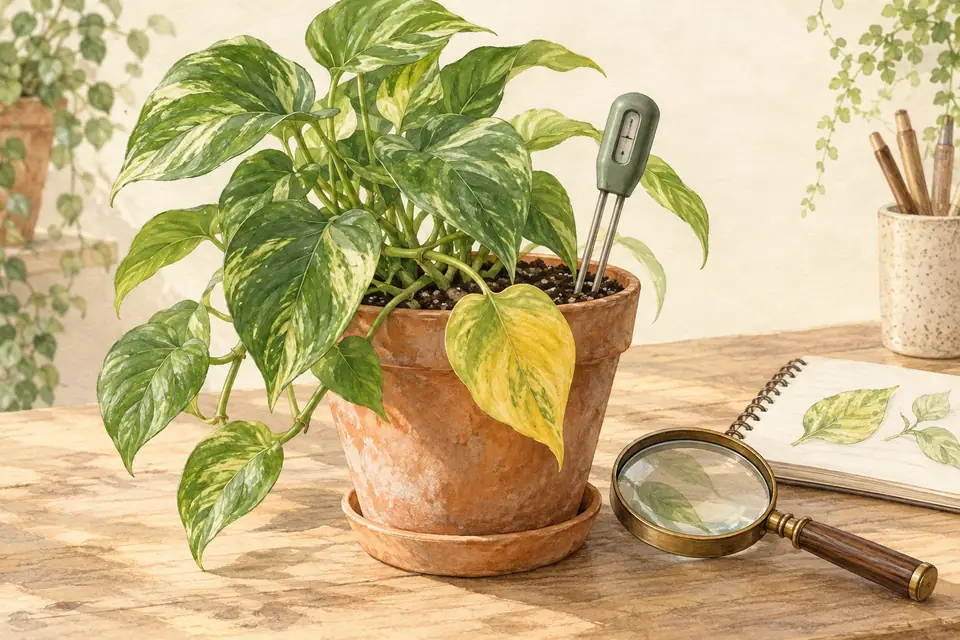
Yellow leaves with green veins usually mean a nutrient problem rather than a disease. The plant health guide explains how to read leaf colour and common symptoms.
Safety notes for lemon trees
Lemon fruit is safe for people, but the peel, leaves, and branches contain essential oils and psoralens. These are listed as toxic to dogs and cats, and they can cause vomiting, diarrhoea, and skin irritation. Psoralens can also make skin more sensitive to sunlight, so wash lemon juice off your hands before spending time in strong sun.
Frequently Asked Questions
Answers to common questions about plant care and this tool.
Related plant guides and tools
View all guides
Further reading and references
- Lemon — Wikipedia Overview of the lemon, its hybrid origin, and its main varieties. A community-edited reference; cross-check details against horticultural sources. [Source ]
- Meyer lemon — Wikipedia Origin of the Meyer lemon and the 1975 release of the virus-free Improved Meyer. [Source ]
- How to grow citrus — Royal Horticultural Society Growing lemons and other citrus in containers, overwintering, and watering. [Source ]
- Lemon — ASPCA Animal Poison Control Toxicity of lemon to dogs, cats, and horses. [Source ]