Indoor plants with names: common houseplants and how to spot them.
Most houseplants are sold under a common name on a plastic tag that is lost within a week. Knowing the name matters, because it tells you how much light and water the plant wants and whether it is safe around a cat or dog. This guide lists 18 of the most common indoor plants with their common and botanical names, the leaf and growth clues that identify each one, and their pet safety according to the ASPCA. It ends with links to the care guides for each group.
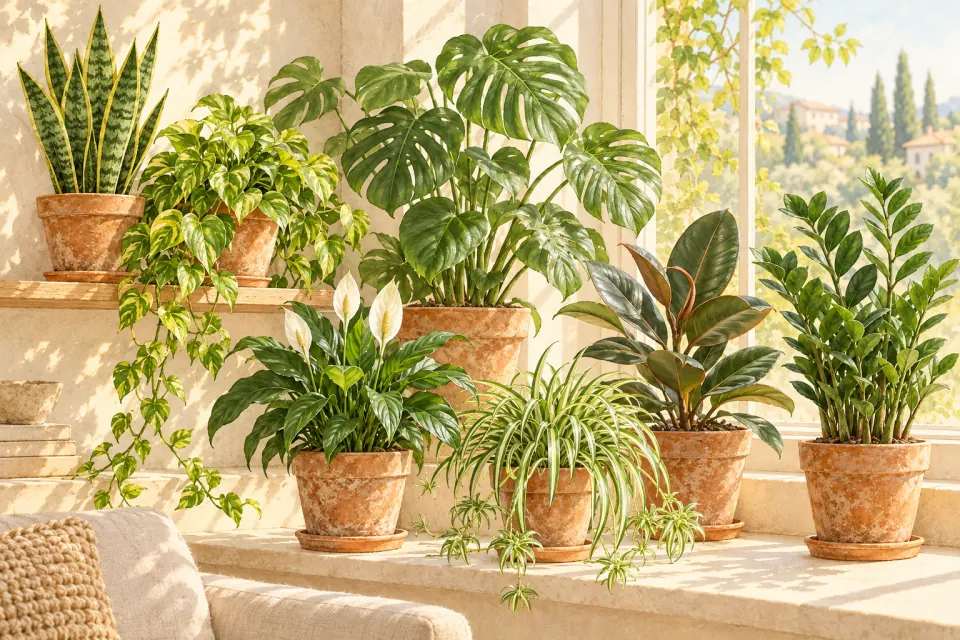
Common house plants names at a glance
The table gives the name you will usually see in shops, the botanical name, one quick identification clue, and the ASPCA pet toxicity listing. Botanical names are more reliable than common names, which change from country to country.
| Common name | Botanical name | How to spot it | Pets (ASPCA) |
|---|---|---|---|
| Golden pothos | Epipremnum aureum | Trailing vine, heart-shaped leaves streaked with yellow | Toxic to dogs and cats |
| Heartleaf philodendron | Philodendron hederaceum | Trailing vine, thinner all-green hearts, new leaves in a sheath | Toxic to dogs, cats, and horses |
| Monstera | Monstera deliciosa | Large leaves with splits and holes, thick aerial roots | Treat as toxic, like other aroids |
| Snake plant | Dracaena trifasciata | Stiff, upright, sword-shaped leaves with grey-green bands | Toxic to dogs and cats |
| ZZ plant | Zamioculcas zamiifolia | Glossy, waxy leaflets in two rows on thick, upright stems | Treat as toxic, like other aroids |
| Peace lily | Spathiphyllum | Dark glossy leaves, white hood-like spathe around a flower spike | Toxic to dogs and cats |
| Chinese evergreen | Aglaonema | Oval leaves patterned silver, pink, or red, on short upright stems | Toxic to dogs, cats, and horses |
| Spider plant | Chlorophytum comosum | Arching grassy leaves, often striped, with baby plants on long stems | Non-toxic to dogs and cats |
| Boston fern | Nephrolepis exaltata 'Bostoniensis' | Long, arching fronds with many small leaflets | Non-toxic to dogs and cats |
| Areca palm | Dypsis lutescens | Clumps of feathery fronds on yellowish, bamboo-like stems | Non-toxic to dogs, cats, and horses |
| Prayer plant and calathea | Maranta and Calathea | Patterned leaves that fold upwards at night | Non-toxic (ASPCA lists Calathea insignis) |
| Money tree | Pachira aquatica | Hand-shaped leaves of five to nine leaflets, often on braided trunks | Non-toxic to dogs, cats, and horses |
| Corn plant | Dracaena fragrans | Long, strap-shaped leaves in tufts on a woody cane | Toxic to dogs, cats, and horses |
| Weeping fig | Ficus benjamina | Small, pointed, shiny leaves on drooping branches; milky sap | Toxic to dogs, cats, and horses (Ficus) |
| Rubber plant | Ficus elastica | Large, thick, glossy oval leaves; red sheath on new growth; milky sap | Treat as toxic, like other Ficus |
| Jade plant | Crassula ovata | Thick, oval, fleshy leaves on a woody, tree-like stem | Toxic to dogs, cats, and horses |
| Aloe vera | Aloe vera | Rosette of thick, grey-green, toothed leaves full of gel | Toxic to dogs, cats, and horses |
| English ivy | Hedera helix | Trailing vine with three- to five-lobed leaves and pale veins | Toxic to dogs, cats, and horses |
How to tell look-alike houseplants apart
A few pairs cause most of the confusion when people search for indoor plants names. These clues settle them quickly.
- Pothos vs heartleaf philodendron: pothos leaves are thicker, slightly textured, and have a groove along the stalk. Philodendron leaves are thinner and softer, and each new leaf emerges from a papery sheath called a cataphyll.
- Snake plant vs ZZ plant: a snake plant has single, flat, sword-like leaves from the soil. A ZZ plant has stems lined with many small glossy leaflets, so each "leaf" is really a compound leaf.
- Calathea vs prayer plant: both fold their leaves at night. Prayer plants (Maranta) are lower and spreading with smaller leaves, while calatheas grow as upright clumps with larger, more boldly patterned leaves.
- Jade plant vs other succulents: jade grows a woody trunk and branches like a small tree, with paired oval leaves. Aloe forms a stemless rosette of long, toothed leaves.
Pet-safe and toxic houseplants
Many of the most popular houseplants are aroids, members of the Araceae family such as pothos, philodendron, peace lily, and Chinese evergreen. The ASPCA lists these as toxic because they contain insoluble calcium oxalate crystals. When chewed, the crystals cause intense burning in the mouth, drooling, pawing at the face, and sometimes vomiting or trouble swallowing. Snake plants and corn plants contain saponins, which mainly cause vomiting and diarrhoea.
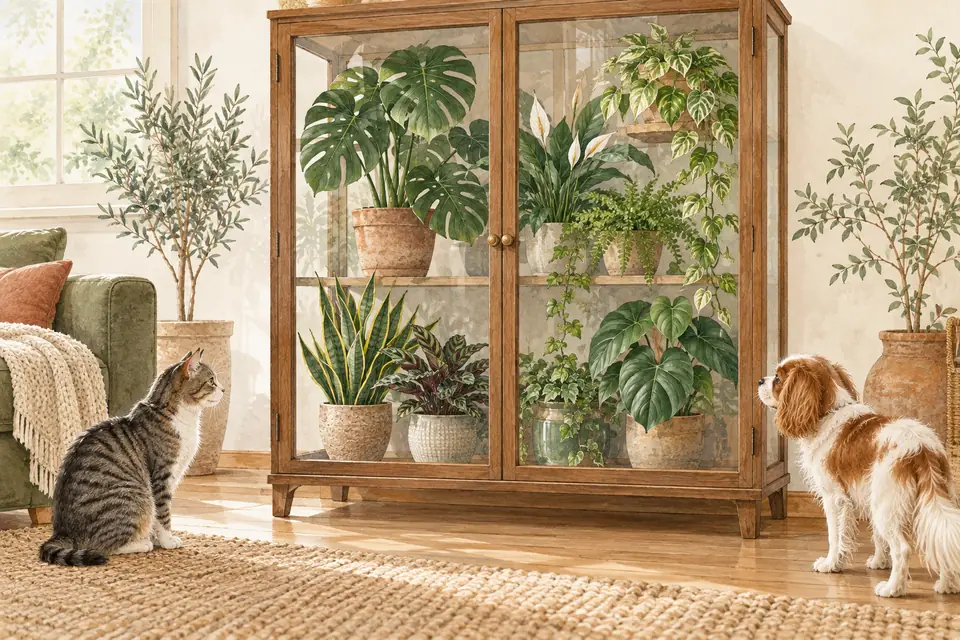
If you share your home with pets, the ASPCA lists the spider plant, Boston fern, areca palm, money tree, and calathea as non-toxic to dogs and cats. Non-toxic does not mean edible: a cat that eats a lot of any leaf may still vomit. Keep toxic plants on high shelves or in rooms pets cannot reach, and call your veterinarian if a pet chews one.
Group your plants by care needs
Once you know a plant's name, you can place it in a care group. Plants in the same group want similar light and watering, which makes a mixed collection much easier to look after.
- Tolerant of low light and dry spells: snake plant and ZZ plant. Both store water and rot if kept wet, so let the soil dry between waterings.
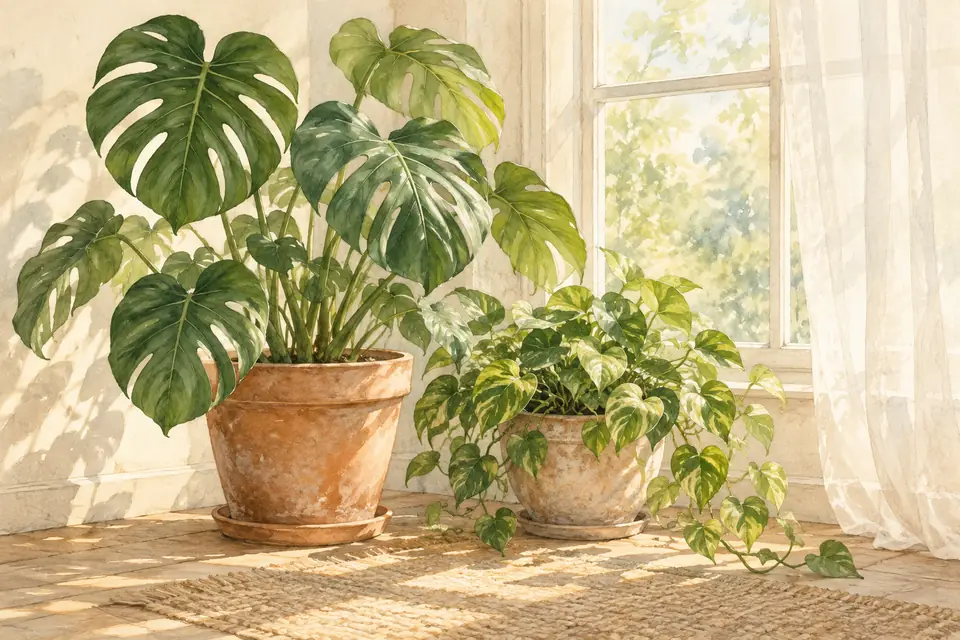
- Aroids and climbers: pothos, philodendron, monstera, and Chinese evergreen like bright, indirect light and watering when the top few centimetres of soil are dry.
- Humidity lovers: ferns, calatheas, and prayer plants brown at the edges in dry air and prefer evenly moist soil.
- Succulents: jade plant and aloe need the brightest window you have and a gritty, fast-draining mix.
Read the monstera and aroid care guide
Signs a houseplant is in the wrong place
Pale, stretched stems leaning towards the window mean too little light. Yellowing lower leaves and soft stems usually mean too much water, while crisp brown tips point to dry air or, in spider plants, fluoride and salts in tap water. Faded, bleached patches on leaves near a sunny window can be sunburn. Moving a plant a metre or two often fixes more problems than any fertiliser.
When you buy a new plant, photograph its tag or write the botanical name on the bottom of the pot. Check the roots and the undersides of the leaves for pests before it joins the rest of your collection.
Frequently Asked Questions
Answers to common questions about plant care and this tool.
Related plant guides and tools
View all guides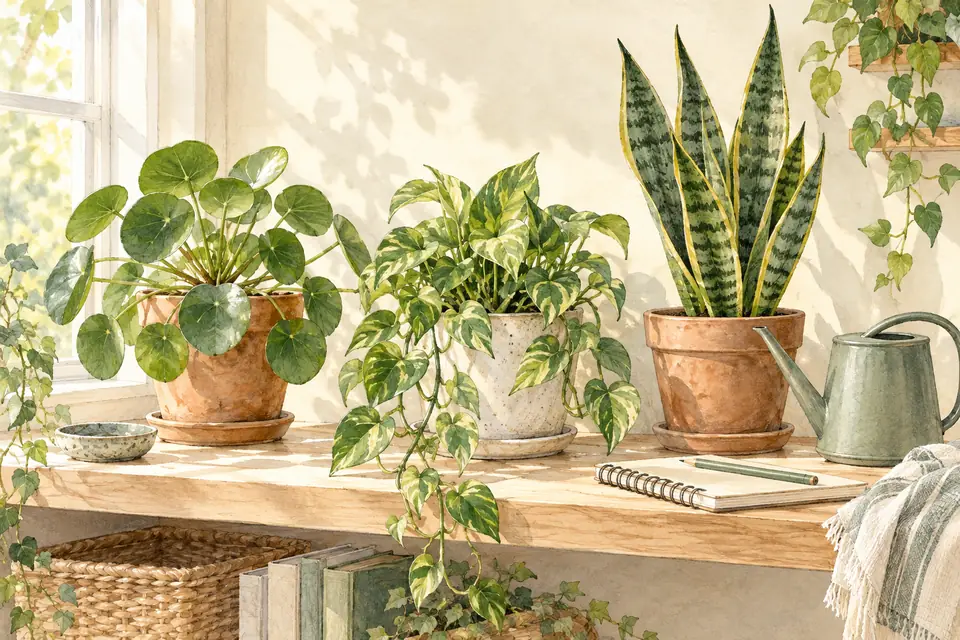
Further reading and references
- Toxic and Non-Toxic Plant List — ASPCA Animal Poison Control The searchable database used for the pet safety column in this guide. [Source ]
- Golden Pothos — ASPCA Animal Poison Control Insoluble calcium oxalates and the signs they cause in dogs and cats. [Source ]
- Mother-in-Law's Tongue — ASPCA Animal Poison Control Snake plant toxicity: saponins. [Source ]
- Spider Plant — ASPCA Animal Poison Control Listed as non-toxic to dogs and cats. [Source ]
- Dracaena trifasciata — Wikipedia The snake plant's native range and its 2017 move from Sansevieria to Dracaena. Community-edited; cross-check key facts. [Source ]
- Zamioculcas — Wikipedia The ZZ plant, an aroid from eastern Africa. [Source ]
- Chlorophytum comosum — Wikipedia The spider plant and its sensitivity to fluoride in tap water. [Source ]